
1,000 new homes planned for Mount Barker as Cedar Woods proposal tests housing and biodiversity balance
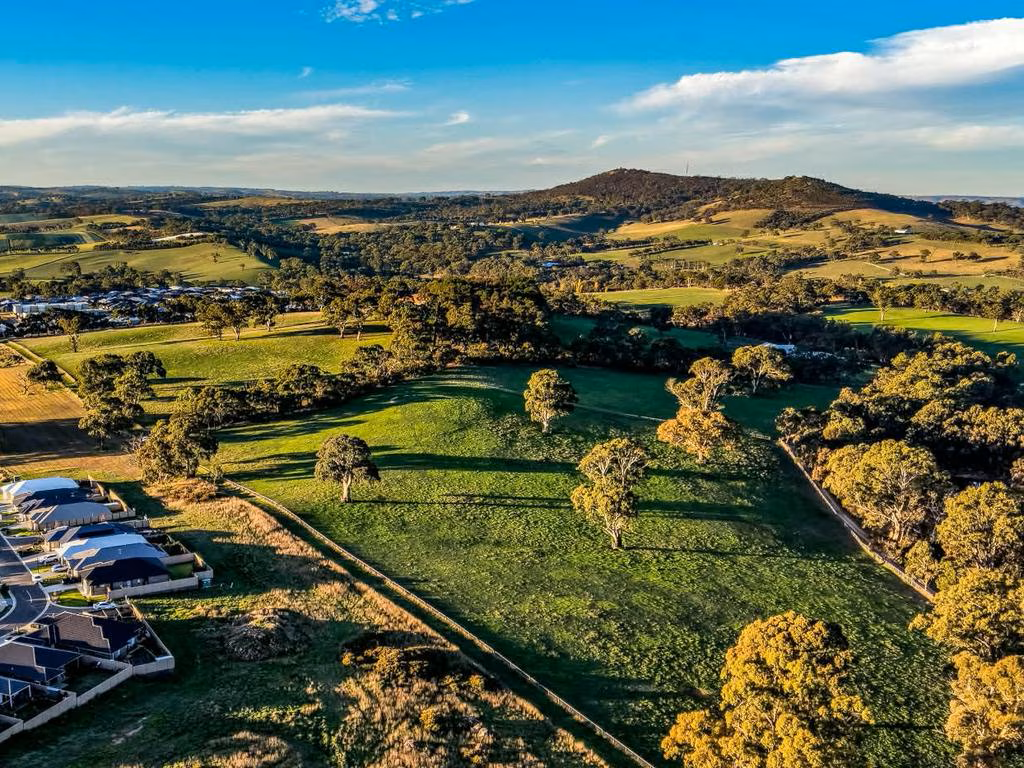
Image Courtesy: Dronie Ward
Proposed development is a test case for the way South Australia is trying to solve the housing shortage by pushing more growth into peri-urban and regional-edge communities.
The proposed Cedar Woods development at Mount Barker is not just another housing project. It is a test case for the way South Australia is trying to solve the housing shortage by pushing more growth into peri-urban and regional-edge communities.
Nearly 1,000 new homes would add much-needed supply, but the reported clearing of native vegetation and removal of mature trees raises a more uncomfortable question: is the state solving the housing crisis by quietly transferring the cost to infrastructure, biodiversity, local character and future residents?
Mount Barker has become one of South Australia’s most visible pressure points for population growth. The Cedar Woods proposal may help deliver homes, but it also risks reinforcing a pattern where housing targets are pursued ahead of fully sequenced roads, schools, health services, transport, water, open space and environmental protection. The controversy is not whether more homes are needed - they are. The controversy is whether growth is being planned as a complete community, or simply approved as a land release pipeline.
This is a growth resilience warning sign. Housing supply is essential, but resilience is weakened when development approvals outpace infrastructure. If Mount Barker continues to absorb metropolitan housing pressure without commensurate investment in transport, services, biodiversity protection and place-making, the long-term result may be congestion, unbalanced ecological loss, lower amenity and declining public trust in the planning system.
This story should be treated as more than a local planning dispute. It goes to the heart of South Australia’s housing strategy. The state needs more dwellings, but if the delivery model depends on clearing sensitive landscapes and stretching regional infrastructure, the true cost of “affordable supply” may simply be deferred into the future.
Resilience Lens:
This is a growth resilience story. Housing supply is essential, but resilience depends on whether expansion protects local identity, biodiversity, transport functionality, water infrastructure and community amenity. Poorly sequenced growth can solve one shortage while creating longer-term infrastructure and environmental liabilities.
Sources:
News.com.au -
AdelaideNow / The Advertiser - Cedar Woods Mount Barker proposal.
SA Department for Housing and Urban Development - South Australia housing supply growth
PlanSA - Engineering requirements for land divisions consultation
About C4R™ - CENTRE FOR RESILIENCE :
C4R™- CENTRE FOR RESILIENCE provides curated, source-based analysis and reporting, combining verified news with strategic insight and resilience-focused interpretation. For in depth analysisof topics like these reach out to C4R™.
C4R™ - CENTRE FOR RESILIENCE is an independent, Australian-based Think Tank initiative advancing economic, social, infrastructure and leadership resilience through research, measurement and practical programs with business, government and community partners.
Media enquiries: via the C4R Contact page.