
Australian wheat outlook weakens further as fuel and fertiliser pressures intensify
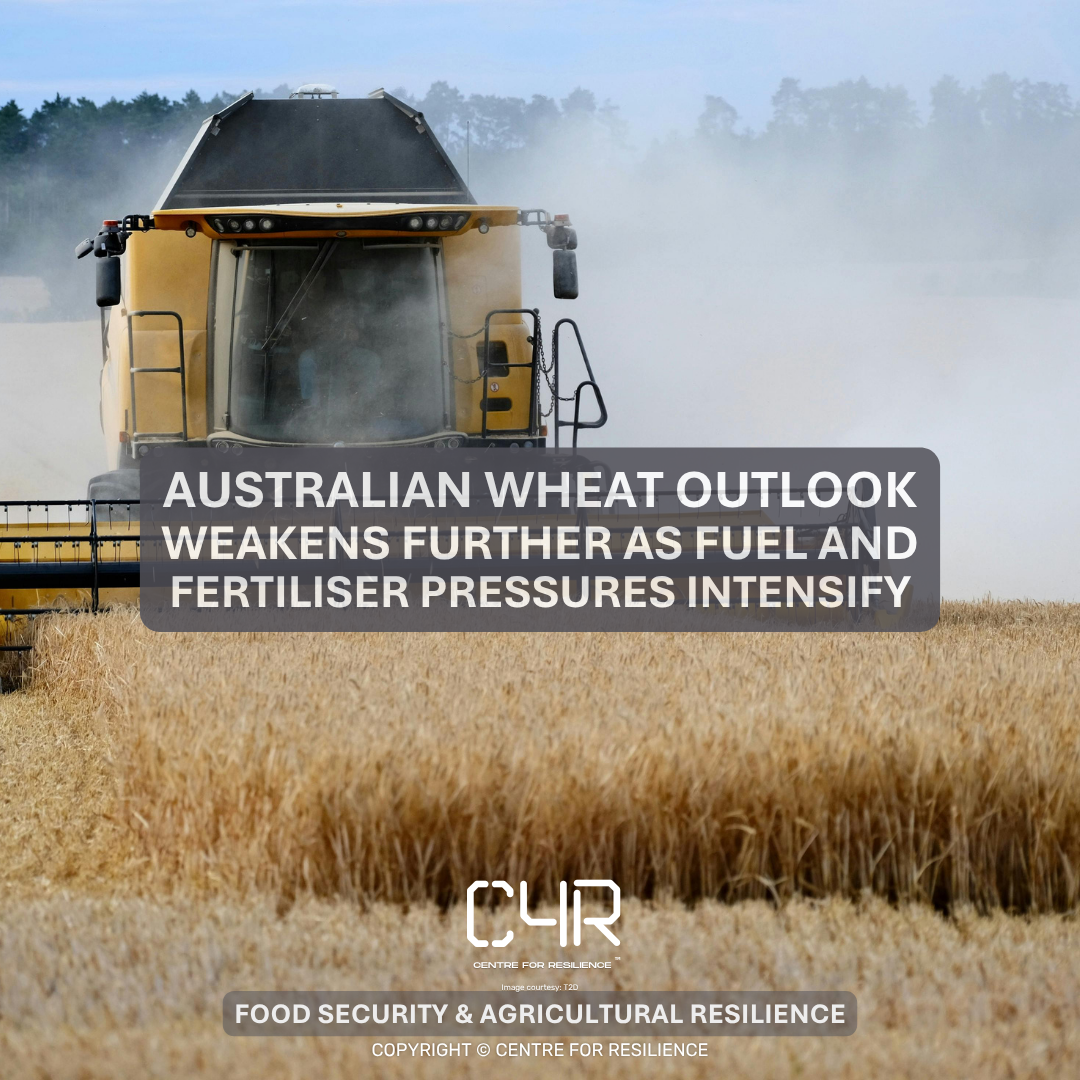
Farmers face mounting pressure from elevated fuel prices …
Australia’s wheat-production outlook is facing renewed pressure as farmers confront a difficult combination of elevated fuel prices, fertiliser volatility and challenging seasonal conditions across key agricultural regions.
The issue is no longer limited to farm input costs. It is becoming a broader food-system resilience challenge, with potential flow-on effects for regional economies, export performance, freight activity, food pricing and agricultural confidence.
Fuel remains one of the most important operating costs across the farming system. It affects machinery use, harvesting, irrigation, freight movement and distribution. When diesel prices rise, cost pressure is felt across almost every stage of production and delivery.
Fertiliser is another major pressure point. Higher fertiliser costs can force farmers to reduce application rates, change crop selection or delay investment decisions. In turn, this may affect yields, soil productivity and future production reliability.
Seasonal conditions are compounding the issue. Dry conditions across parts of regional Australia are increasing production uncertainty and placing greater pressure on planting decisions. Where farmers face poor rainfall, higher input costs and uncertain returns, they may reduce planting areas or shift toward lower-risk crop options.
What This Means:
The implications extend well beyond the agricultural sector. A weaker wheat outlook may affect:
food pricing and household affordability
grain export earnings
regional employment
freight and logistics demand
machinery and input suppliers
storage and port activity
rural business confidence
government drought and regional support settings
Australia’s grain sector is a nationally significant export industry. Any material reduction in production can affect regional income, trade revenue and downstream industries connected to agriculture.
The issue also highlights the growing vulnerability of food systems to global energy and fertiliser markets. Australia may be a major agricultural producer, but it remains exposed to imported inputs, global shipping conditions, currency movements and geopolitical disruption.
Resilience Lens:
C4R - CENTRE FOR RESILIENCE sees this as a food-system resilience issue rather than a single commodity-cycle story.
The immediate concern is wheat production. The deeper strategic issue is the exposure of Australian agriculture to simultaneous input, climate and supply-chain shocks.
The key policy question is whether Australia has sufficient visibility, reserves and contingency planning around the essential inputs that keep food production operating during periods of global disruption.
This is a clear example of interconnected systems risk. Food resilience is not only about rainfall or farm productivity. It depends on the stability of multiple linked systems:
fuel security
fertiliser availability
freight reliability
climate conditions
farm cash flow
regional workforce availability
export logistics
port and storage capacity
When several of these pressures occur at the same time, the resilience of the entire food system is tested.
For policymakers, the issue reinforces the need to view agriculture as critical economic infrastructure. Strategic fertiliser access, fuel contingency planning, regional freight reliability, drought preparedness and farm financial resilience all form part of a broader food-security architecture.
For regional communities, the concern is also economic and social. Lower production can reduce local spending, weaken contractor demand and place additional pressure on regional businesses already exposed to labour, insurance and cost-of-living pressures.
Sources:
Reuters - https://www.reuters.com
ABS agricultural datasets - https://www.abs.gov.au
Australian Bureau of Agricultural and Resource Economics and Sciences - https://www.agriculture.gov.au/abares
Grains Research and Development Corporation - https://grdc.com.au
About C4R™ - CENTRE FOR RESILIENCE :
C4R™- CENTRE FOR RESILIENCE provides curated, source-based analysis and reporting, combining verified news with strategic insight and resilience-focused interpretation. For in depth analysisof topics like these reach out to C4R™.
C4R™ - CENTRE FOR RESILIENCE is an independent, Australian-based Think Tank initiative advancing economic, social, infrastructure and leadership resilience through research, measurement and practical programs with business, government and community partners.
Media enquiries: via the C4R Contact page.