
Barossa IHG Hotel Approved
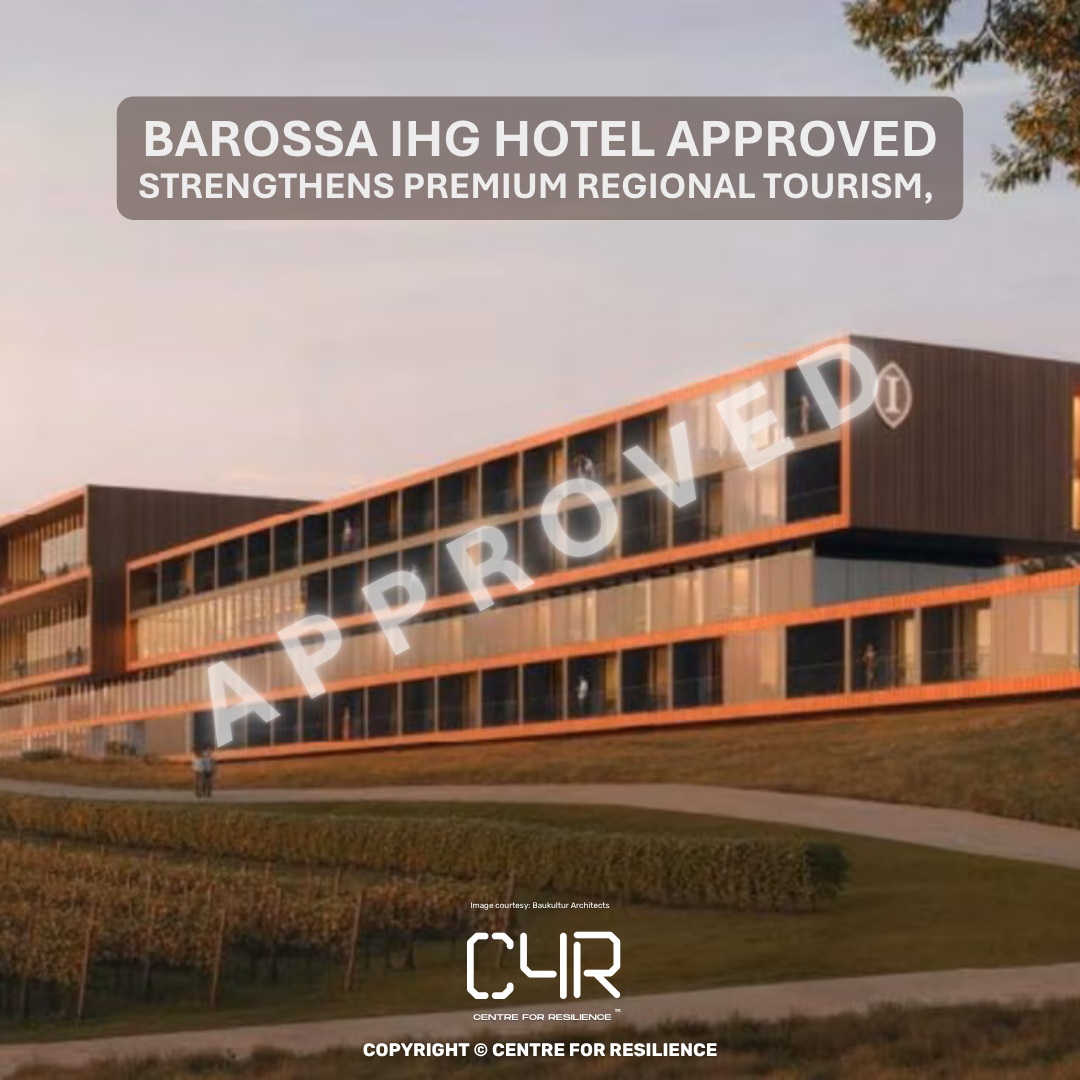
Image courtesy: Baukultur Architects
Barossa InterContinental approval strengthens premium regional tourism, but local capacity risks remain
The South Australian Government has approved a major five-star InterContinental hotel and winery development at Williamstown in the Barossa. The Government says Strategic Alliance and Commercial Pty Ltd has received approval for the project on Hoffnungsthal Road, describing it as a significant tourism investment in one of the state’s leading wine regions.
The project aligns with South Australia’s push to increase high-value tourism, regional visitation and premium accommodation. The South Australia Tourism Plan 2030 sets a target of $12.8 billion in visitor expenditure by 2030 and includes a goal to position South Australia as a leading sustainable destination.
The Barossa InterContinental approval is a strong signal for premium regional tourism, but it also raises familiar regional capacity questions: workforce housing, road access, water, local procurement, community support, landscape protection and brand fit.
The best outcome would not simply be a hotel in the Barossa. It would be a high-value tourism anchor that supports wine, food, local employment, regional supply chains and international market positioning.
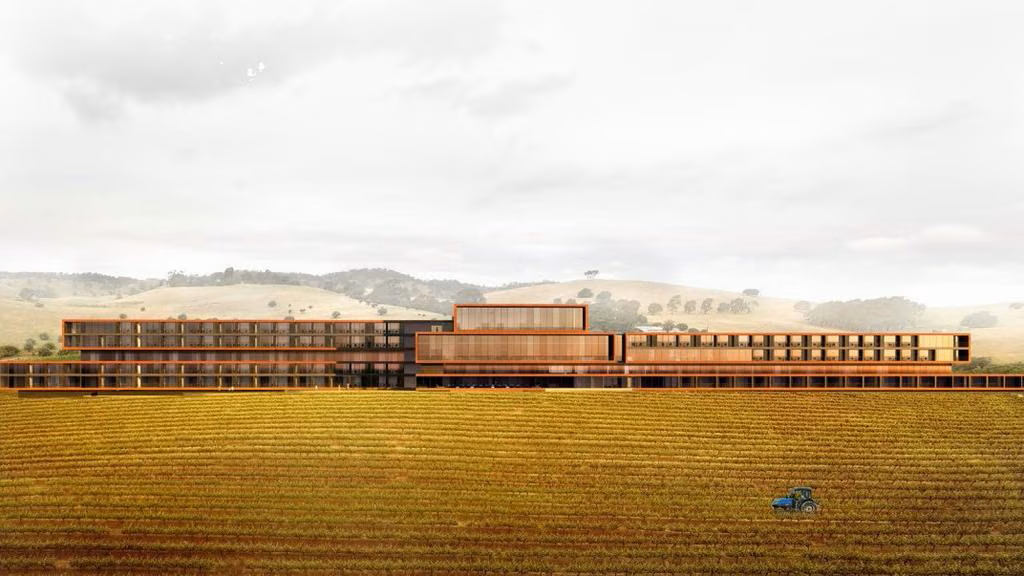
Image courtesy: Baukultur Architects
Resilience Lens:
This is a Regional Economic Resilience and Tourism Resilience story. Premium accommodation can diversify regional economies and lift visitor yield, but it must be integrated with workforce, infrastructure, water, community and environmental settings.
Sources:
Premier of South Australia - Green light for Barossa InterContinental
https://premier.sa.gov.au/media-releases/news-items/green-light-for-barossa-intercontinentalDepartment for Housing and Urban Development - Green light for Barossa InterContinental
https://www.dhud.sa.gov.au/news/green-light-for-barossa-intercontinentalSouth Australia Tourism Plan 2030
https://www.rdaep.org.au/wp-content/uploads/2025/06/SA-Tourism-Plan-2030.pdfDepartment of State Development - Tourism investment in South Australia
https://invest.sa.gov.au/sectors/tourism
About C4R™ - CENTRE FOR RESILIENCE :
C4R™- CENTRE FOR RESILIENCE provides curated, source-based analysis and reporting, combining verified news with strategic insight and resilience-focused interpretation. For in depth analysisof topics like these reach out to C4R™.
C4R™ - CENTRE FOR RESILIENCE is an independent, Australian-based Think Tank initiative advancing economic, social, infrastructure and leadership resilience through research, measurement and practical programs with business, government and community partners.
Media enquiries: via the C4R Contact page.