
Rare earths and critical minerals move further into allied supply-chain security agenda
Proposed development is a test case for the way South Australia is trying to solve the housing shortage by pushing more growth into peri-urban and regional-edge communities.
Critical minerals are moving deeper into the centre of allied economic security.
Recent reporting from Reuters says new regulations in the United States and Europe are influencing customers to move away from Chinese rare earth supply chains, according to Lynas Rare Earths chief executive Amanda Lacaze. Lynas is the largest non-Chinese producer of rare earths, and its comments highlight the growing commercial effect of geopolitical supply-chain rules.
At the same time, Australia and Japan have signed new agreements to strengthen cooperation on energy and critical minerals. Reuters reported that the two countries emphasised secure and resilient supply chains, with Australia to allocate up to A$1.3 billion to support critical minerals projects involving Japan.
ABC reporting also confirmed that Australia and Japan signed agreements covering energy, defence and critical minerals, while warning against economic coercion and discussing joint responses to economic security threats.
This matters because the critical minerals story is no longer simply about mining. The key question is whether Australia can move further along the value chain.
Mining deposits are only one part of sovereign capability. Strategic resilience depends on processing, refining, offtake agreements, floor-price mechanisms, environmental approvals, industrial energy costs, ports, skilled labour and trusted customer networks.
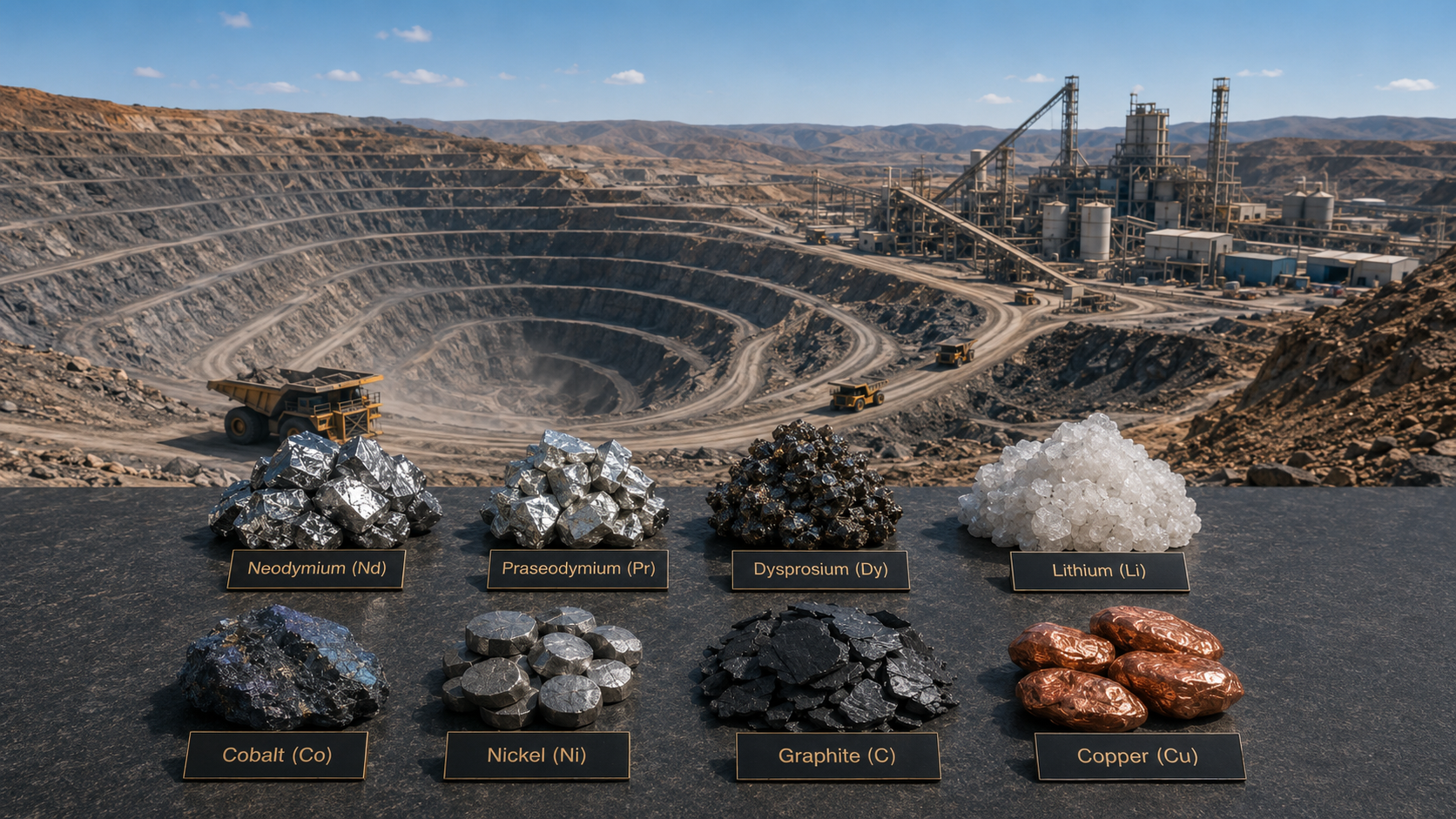
Rare earths, graphite, gallium, nickel, lithium, fluorite and other strategic inputs sit behind defence systems, electric vehicles, batteries, wind turbines, electronics, semiconductors and advanced manufacturing.
For South Australia, the issue is particularly relevant. The state’s industrial resilience agenda includes energy, ports, metals processing, regional employment, defence supply chains and advanced manufacturing. Critical minerals strategy therefore connects directly to South Australia’s future industrial base.
Resilience Lens:
This is a supply chain resilience and sovereign capability issue. Diversifying away from concentrated Chinese processing is not just an economic opportunity. It is a defence, energy transition and industrial continuity requirement.
The resilience test is whether Australia can turn resource endowment into reliable, processed, allied supply.
Sources:
Reuters - Lynas CEO says US and Europe rules sway buyers from Chinese rare earths.
https://www.reuters.com/world/china/lynas-ceo-says-us-europe-rules-sway-buyers-chinese-rare-earths-2026-05-06/Reuters - Australia and Japan sign agreements on energy and critical minerals.
https://www.reuters.com/business/energy/japan-pm-takaichi-set-talks-with-australias-albanese-energy-security-2026-05-04/ABC News - Australia and Japan sign agreements on energy, defence and critical minerals.
https://www.abc.net.au/news/2026-05-04/australia-japan-sign-agreements-energy-defence-critical-minerals/106638864AP News - Japan and Australia deepen cooperation on energy, defence and critical minerals.
https://apnews.com/article/aca28a3fecc19306381d83382fd23abf
About C4R™ - CENTRE FOR RESILIENCE :
C4R™- CENTRE FOR RESILIENCE provides curated, source-based analysis and reporting, combining verified news with strategic insight and resilience-focused interpretation. For in depth analysisof topics like these reach out to C4R™.
C4R™ - CENTRE FOR RESILIENCE is an independent, Australian-based Think Tank initiative advancing economic, social, infrastructure and leadership resilience through research, measurement and practical programs with business, government and community partners.
Media enquiries: via the C4R Contact page.