
Adelaide Grand Final Surpasses $100 Million Economic Benefit
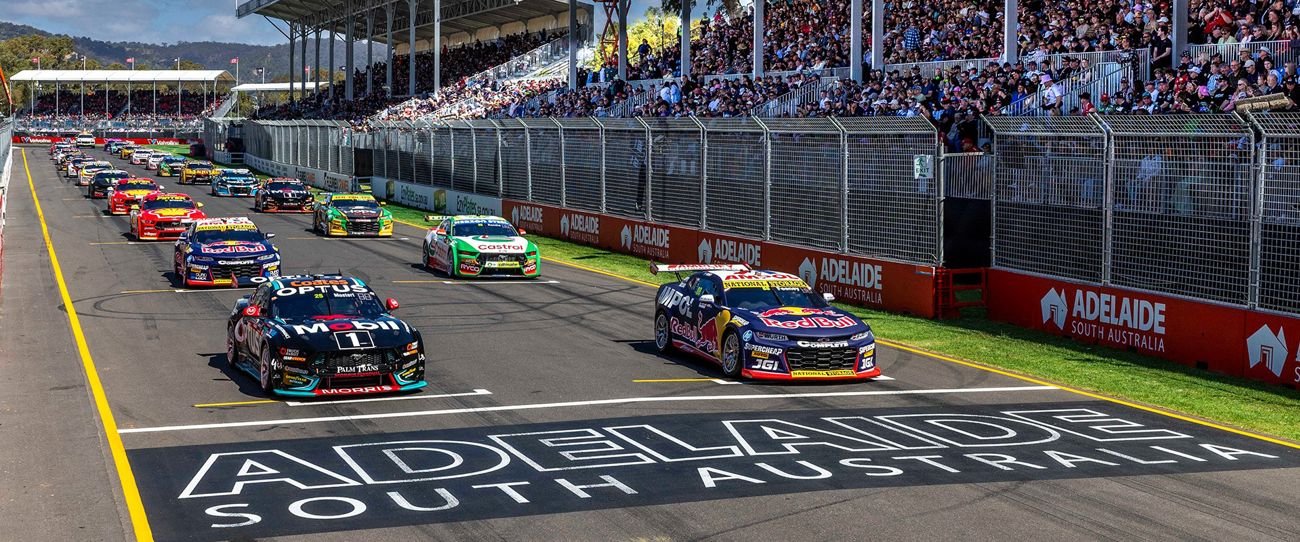
Image courtesy: SATC
The 2025 bp Adelaide Grand Final delivered a reported $100.7 million economic benefit for South Australia, the first time the event has exceeded $100 million.
Adelaide Grand Final Surpasses $100 Million Economic Benefit
The 2025 bp Adelaide Grand Final has delivered a record economic result for South Australia, with the State Government reporting a $100.7 million economic benefit to the state.
It is the first time the event has exceeded the $100 million mark, representing a significant lift on the previous year’s result. Reported attendance reached 285,700 across the event, up from 259,400 in 2024, with more than 66,000 interstate and international visitors contributing to the result.
The result reinforces the growing economic role of South Australia’s major events calendar. The State Government reported that the bp Adelaide Grand Final, Gather Round and LIV Golf together delivered almost $800 million in economic benefit to South Australia between 2022 and 2025.
The visitor profile is particularly important. Interstate and international visitors tend to generate higher-value economic activity because they spend on accommodation, hospitality, transport, retail and tourism experiences. The South Australian Tourism Commission also reported that interstate and overseas attendances were up 23 per cent, with the event helping drive total visitor nights.
The 2026 bp Adelaide Grand Final is scheduled for 26 to 29 November 2026 at the Adelaide Street Circuit. Guns N’ Roses has been announced as the Sunday concert headliner, with Ticketmaster confirming the band will perform on 29 November 2026 as part of the event program.
A Major Event Economy, Not Just a Race Weekend
The bp Adelaide Grand Final is now positioned as more than a motorsport event. It is part of a broader South Australian events strategy that uses major events to drive tourism, hospitality, brand exposure and city activation.
For Adelaide, the economic return is significant because the event supports multiple sectors at once:
Hotels and serviced apartments
Restaurants, bars and cafes
Event suppliers
Transport operators
Retail and night-time economy businesses
Security and logistics providers
Local tourism operators
Entertainment and live music
Casual and seasonal employment
The event also helps reinforce Adelaide’s positioning as a compact major events city, where visitors can move between accommodation, hospitality, entertainment and event precincts with relative ease.
Why the Result Matters
The $100.7 million figure gives the state a stronger basis for treating major events as a serious economic development tool.
However, as the scale of the portfolio grows, South Australia also needs a more robust approach to measuring return on investment. Economic benefit should be assessed alongside visitor origin, length of stay, accommodation pressure, public cost, disruption, environmental management and local business participation.
The Adelaide Grand Final should therefore be seen as part of a broader event portfolio that includes Gather Round, LIV Golf, the Adelaide Festival, WOMADelaide, Illuminate Adelaide, Santos Tour Down Under and other major cultural, sport and tourism events.
What This Means for Resilience
From a resilience perspective, major events can help strengthen the state economy by creating diversified visitor demand, supporting small businesses, activating the CBD and generating external attention for South Australia.
However, the model must be actively managed. A successful event economy requires more than headline economic benefit numbers. It requires capacity planning, public realm management, event risk planning, accommodation analysis, transport coordination and local supplier development.
For C4R - CENTRE FOR RESILIENCE, the key question is: How does South Australia turn individual major event success into a resilient, diversified and measurable events economy?
That means tracking whether event benefits are spread across the broader economy, whether local businesses are capturing the upside, whether major events are creating year-round visitation confidence, and whether the state’s infrastructure can keep pace with demand.
The Adelaide Grand Final’s $100.7 million result is a strong signal. The next step is to turn that success into a structured event resilience model.
Sources:
Premier of South Australia - bp Adelaide Grand Final economic benefit tops $100 million for the first time
https://premier.sa.gov.au/media-releases/news-items/bp-adelaide-grand-final-economic-benefit-tops-%24100-million-for-the-first-timeSupercars - bp Adelaide Grand Final announces historic economic benefit
https://www.supercars.com/news/supercars-news-2026-bp-adelaide-grand-final-announces-historic-economic-benefit-south-australiaOfficial bp Adelaide Grand Final website
https://adelaidegrandfinal.com.au/Ticketmaster - bp Adelaide Grand Final to host Guns N’ Roses
https://discover.ticketmaster.com.au/music/bp-adelaide-grand-final-host-rock-icons-guns-n-roses-21533South Australian Tourism Commission LinkedIn post on the economic result
https://www.linkedin.com/posts/south-australian-tourism-commission_bp-adelaide-grand-final-economic-benefit-activity-7462743970973003776-F-7YSpeedcafe - Adelaide Grand Final delivers $100 million boost
https://speedcafe.com/supercars-news-adelaide-grand-final-economic-impact-100-million-peter-malinauskas/Auto Action - Adelaide Grand Final makes more records
https://autoaction.com.au/2026/05/21/adelaide-grand-final-makes-more-records/
About C4R™ - CENTRE FOR RESILIENCE :
C4R™- CENTRE FOR RESILIENCE provides curated, source-based analysis and reporting, combining verified news with strategic insight and resilience-focused interpretation. For in depth analysis of topics like these reach out to C4R™.
C4R™ - CENTRE FOR RESILIENCE is an independent, Australian-based Think Tank initiative advancing economic, social, infrastructure and leadership resilience through research, measurement and practical programs with business, government and community partners. Learn more at https://www.c4resilience.com/.
Media enquiries: via the C4R Contact page.