
Osborne a National Shipbuilding Magnet for Hunter Frigate Supply Chain
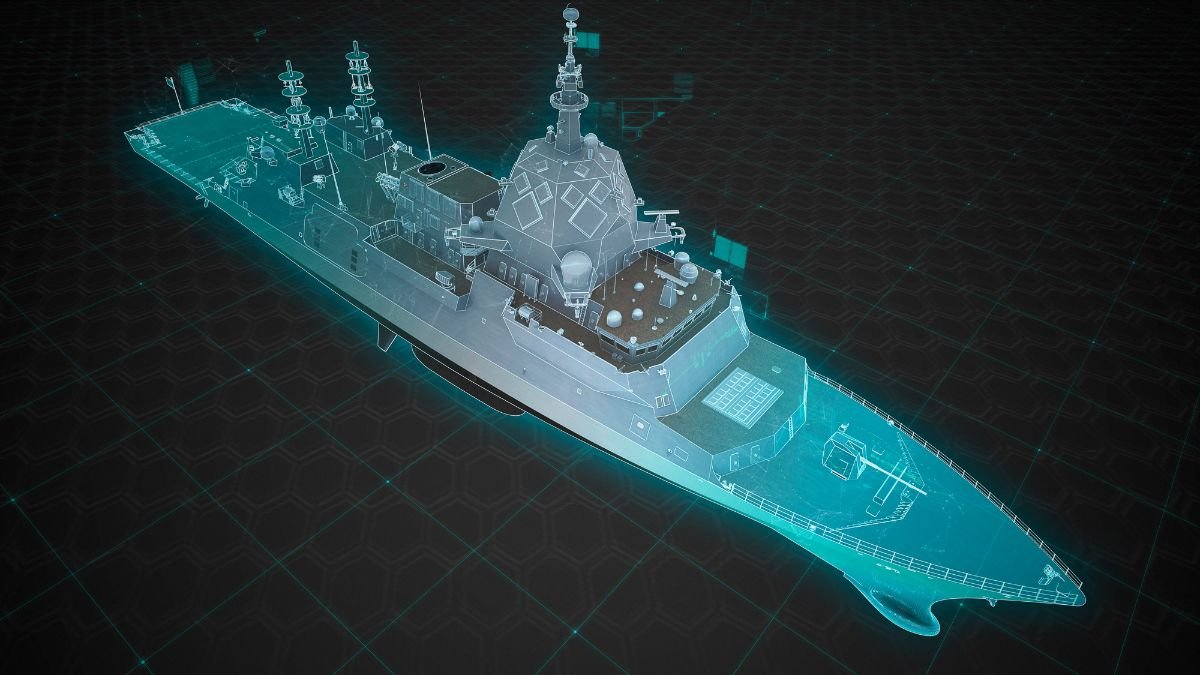
Image courtesy: BAE
South Australia’s defence industry is moving deeper into the delivery phase …
South Australia’s defence industry is moving deeper into the delivery phase, as the Hunter-class frigate program continues to pull suppliers, trades, engineering capability and specialist components into the Osborne Naval Shipyard.
The Hunter-class frigate program is not simply a shipbuilding project. It is a national industrial integration exercise, with Osborne functioning as the central production and assembly hub for a wider Australian supply chain. Recent reporting states that more than 2,000 workers are involved in constructing the first Hunter-class frigate at Osborne, with the first ship now more than 60 per cent complete. South Australian firms such as Century Engineering and Shadbolt Group are among the local companies contributing to the build, alongside suppliers from other states.
The broader Hunter program is designed to deliver six advanced anti-submarine warfare frigates for the Royal Australian Navy. Defence describes the Hunter-class as based on the United Kingdom’s Type 26 Global Combat Ship, modified to meet Australian requirements, and built in Australia by BAE Systems Maritime Australia at Osborne in South Australia.
For South Australia, the significance is structural. Defence SA has reported that the state’s defence industry generated $2.015 billion in Gross Value Added in 2024-25, more than double the $977 million recorded in 2019-20, and that more than 400 local defence businesses operate across the state.
This makes the Hunter program a live test of whether South Australia can convert major defence procurement into enduring industrial capability. The state’s competitive position will increasingly depend on supply chain depth, workforce continuity, digital production systems, local SME participation and schedule delivery.
What This Means for Resilience
The strategic story is no longer just that South Australia has won major defence work. The more important question is whether the state can build a resilient, scalable and internationally credible naval shipbuilding ecosystem.
The Hunter-class program places South Australia at the centre of a national production network. If executed well, it strengthens local industry, supports advanced manufacturing, builds exportable expertise and provides a workforce bridge into future AUKUS-related submarine construction and sustainment.
A Resilience Lens
The resilience value lies in continuity. Defence supply chains are fragile when they rely on single projects, narrow work packages or short-term labour cycles. They become more resilient when shipyards, SMEs, training providers and prime contractors operate as a connected industrial system.
For C4R - CENTRE FOR RESILIENCE we position this as a sovereign capability indicator:
supplier depth
workforce availability
local content
skills transfer
schedule confidence
Importantly this provides the ability of South Australian firms to win repeatable defence work beyond one project cycle.
Sources:
The Australian - National shipbuilding effort unites as companies deliver parts for new Hunter frigates
https://www.theaustralian.com.au/indian-ocean-defence-security/national-shipbuilding-effort-unites-as-companies-deliver-parts-for-new-hunter-frigates/news-story/1fcf653ad1c6e94652ae72b60687e6d6Defence SA - South Australia sets the pace for Australia’s defence industry growth
https://defencesa.com/news-events-and-media/news/south-australia-sets-the-pace-for-australias-defence-industry-growth/Department of Defence - Hunter Class Frigate
https://www.defence.gov.au/defence-activities/projects/hunter-class-frigateRoyal Australian Navy - Hunter Class Frigate
https://www.navy.gov.au/capabilities/ships-boats-and-submarines/hunter-class-frigateBAE Systems - Building momentum: over half of the first Hunter-class frigate is now in production
https://www.baesystems.com/en/insight/building-momentum-over-half-of-the-first-hunter-class-frigate-is-now-in-production
About C4R™ - CENTRE FOR RESILIENCE :
C4R™- CENTRE FOR RESILIENCE provides curated, source-based analysis and reporting, combining verified news with strategic insight and resilience-focused interpretation. For in depth analysis of topics like these reach out to C4R™.
C4R™ - CENTRE FOR RESILIENCE is an independent, Australian-based Think Tank initiative advancing economic, social, infrastructure and leadership resilience through research, measurement and practical programs with business, government and community partners. Learn more at https://www.c4resilience.com/.
Media enquiries: via the C4R Contact page.