
State Government signals harder line on Adelaide's Councils
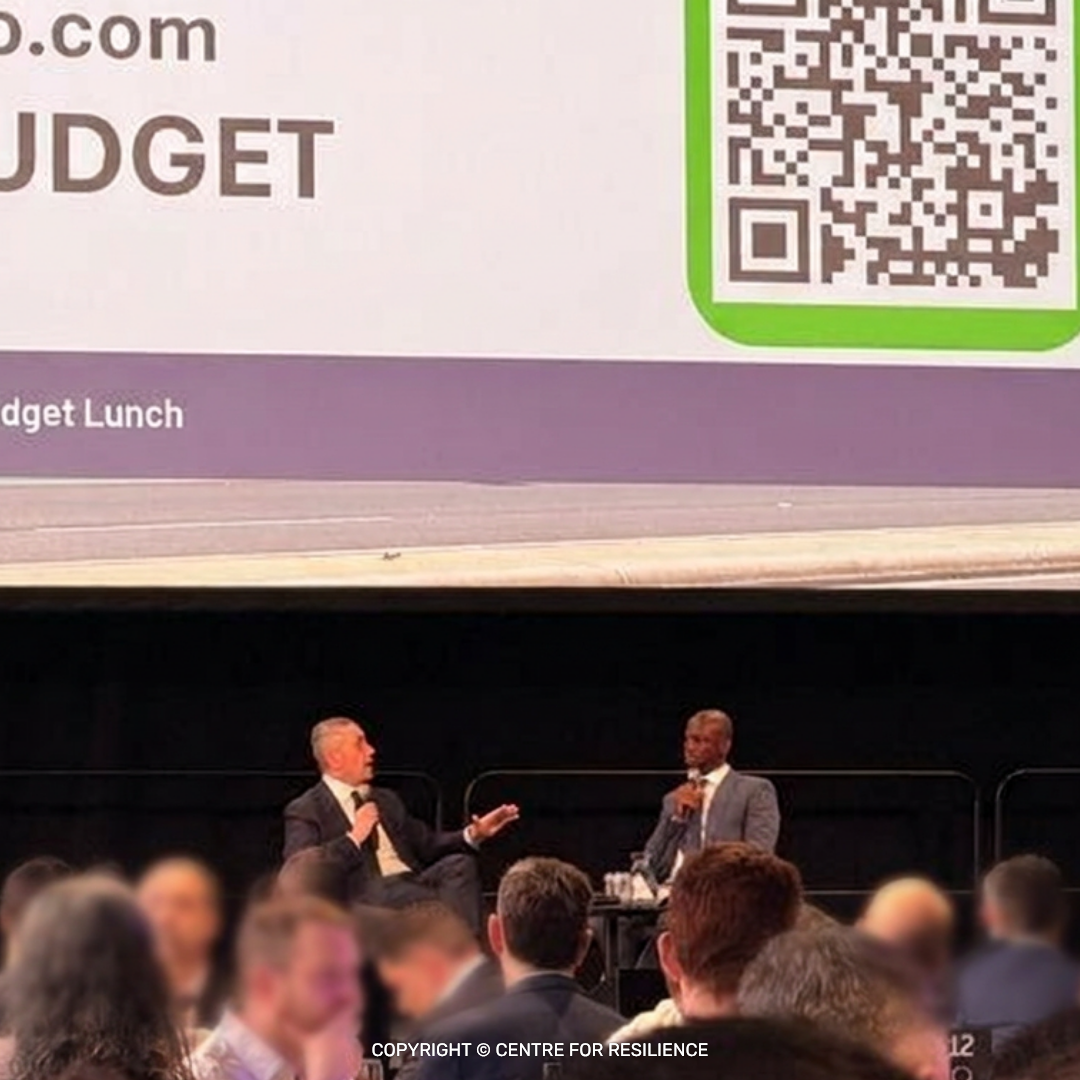
The Treasurer of South Australia, The Hon. Tom Koutsantonis and Property Council South Australia Executive Director Bruce Djite
Speaking at the Property Council of Australia South Australia State Budget Lunch, Treasurer Tom Koutsantonis delivered one of the strongest public signals yet that the State Government is prepared to challenge local government where it believes economic development is being constrained.
C4R - CENTRE FOR RESILIENCE Daily Resilience Review
State Government signals harder line on Adelaide's economic future as investment and planning tensions escalate
What began as a discussion on the South Australian State Budget quickly evolved into something much larger.
Attending the Property Council of Australia South Australia State Budget Lunch, it became apparent that one of the dominant themes was not taxation, government spending or fiscal policy, but rather how Adelaide intends to govern its future growth.
For an audience comprising developers, investors, planners, consultants, architects, financiers and business leaders, the discussion centred on the relationship between economic development, planning certainty and local government.
The catalyst came when Property Council South Australia Executive Director Bruce Djite asked Treasurer Tom Koutsantonis a simple but significant question:
"What is the one thing you'd change tomorrow to make South Australia a more attractive place to invest, build and do business?"
The Treasurer's response immediately shifted the conversation towards local government reform.
"I'd like to see councils reform the way they conduct themselves."
He continued:
"I'd like to see them consider more amalgamations."
While the comments applied broadly to councils, it quickly became evident that Adelaide City Council was at the centre of the discussion.
Bruce Djite argued that one of the greatest challenges facing investment confidence was not necessarily statutory planning powers, but the public narrative surrounding development within the city.
He told the audience:
"This is a sector that pays 75 per cent of their council rates, and it's a council that provides 6.5 per cent of their council rates back to the Adelaide Economic Development Agency."
He added:
"It's not about whether they have the power to actually stop something or not. It's the anti-development rhetoric, it's the noise, it's stoking the fires."
The Treasurer indicated he shared much of that frustration.
"I have a lot of sympathy for what you're saying."
He continued by reinforcing what he believes should be the role of local government.
"Councils serve a purpose, and we want them to stick to that purpose."
"When they move away from that purpose, the government needs to act, we are needing to act more and more and more, and that is a distraction from our core business."
Perhaps the most revealing comment of the afternoon came moments later.
"I hear and feel your pain, and there's only so much that we can put up with."
The Treasurer also referred to opposition surrounding major events within Adelaide's Park Lands, suggesting the State Government would continue pursuing projects it considered strategically important.
"Adelaide City Council will say they don't want the MotoGP at Adelaide."
"They will fail in that endeavour."
The significance of these remarks extends well beyond one council or one development proposal.
Only days earlier, the 2026-27 State Budget announced that the South Australian Productivity Commission would examine practical opportunities to reduce regulatory burden across both State and local government. Coupled with the Government's ongoing emphasis on housing delivery, major events, private investment and economic growth, the comments suggest planning governance has become one of the State's emerging policy priorities.
Following the luncheon, Bruce Djite reinforced the Property Council's position, arguing that economic development must remain central to Adelaide's future prosperity.
"The Property Council and broader community strongly support economic vibrancy and an activated CBD."
He continued:
"We urge the state government to stay the course in the face of this noisy NIMBY minority."
Adelaide Lord Mayor Jane Lomax-Smith rejected suggestions that the Council was anti-development, defending both the City's investment record and its role in protecting Adelaide's long-term interests.
She said:
"I don't appreciate me or my council being verballed by State Government."
The Lord Mayor pointed to significant projects currently supported by Council, including Tapangka, Market Square, 88 O'Connell and City East, arguing Adelaide continued to receive strong investor confidence.
She also maintained that the Council's position regarding the North Adelaide Golf Course redevelopment and the proposed MotoGP circuit was focused on process rather than opposition.
"We have never opposed the golfing event being brought to the city - for us the question has always been about the 'how'."
Regarding the MotoGP proposal, she added:
"As for the MotoGP - in terms of rider safety, impact on public infrastructure, city disruption, and the natural environment, alarm bells are ringing."
Ultimately, the discussion highlighted two competing visions for Adelaide's future.
One places greater emphasis on accelerating housing supply, attracting private investment, activating the CBD and supporting major events as drivers of economic growth.
The other prioritises heritage, environmental stewardship, public consultation and the protection of Adelaide's unique Park Lands.
Finding the balance between those competing priorities will shape not only Adelaide's planning system, but also its economic competitiveness, investor confidence and long-term resilience.
Resilience Lens
For C4R - CENTRE FOR RESILIENCE, this debate extends well beyond planning approvals.
Resilient cities require governance systems that provide certainty, transparency and timely decision-making while balancing environmental stewardship and community expectations. As Adelaide continues to grow, the effectiveness of collaboration between State Government, local government and the private sector will become an increasingly important determinant of economic resilience and the State's ability to attract investment, create jobs and deliver housing.
Sources:
Property Council of Australia South Australia State Budget Lunch (attended)
Statements by Treasurer Tom Koutsantonis
Statements by Bruce Djite, Executive Director, Property Council South Australia
Statements by Lord Mayor Dr Jane Lomax-Smith
The Advertiser
South Australian Government - 2026-27 State Budget
South Australian Productivity Commission
About C4R™ - CENTRE FOR RESILIENCE :
This is the type of outcome that reinforces the work being advanced through C4R™ - CENTRE FOR RESILIENCE - where strategic infrastructure underpins both growth and stability. For in depth analysis of topics like these reach out to C4R™.
C4R™ - CENTRE FOR RESILIENCE is an independent, Australian-based Think Tank initiative advancing economic, social, infrastructure and leadership resilience through research, measurement and practical programs with business, government and community partners. Learn more at https://www.c4resilience.com/.
Media enquiries: via the C4R Contact page.