
Middle East energy shock creates Australian lubricant shortages
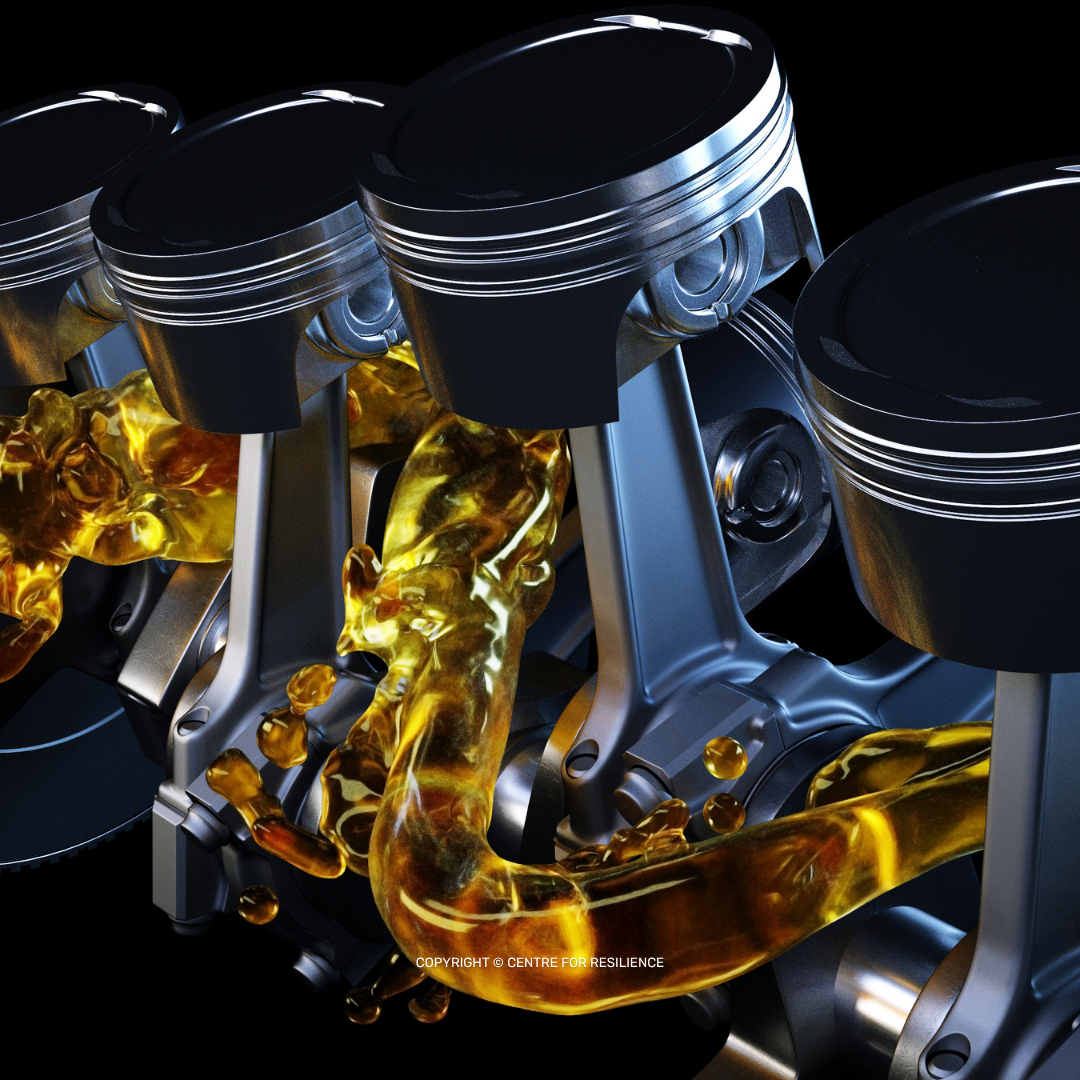
Image Created by Canva, Copyright © Canva, Centre for Resilience
Middle East energy shock flows into Australian supply chains through freight and lubricant shortages.
Global energy shocks are flowing into Australian supply chains through channels that extend well beyond petrol prices. Recent Reuters reporting showed that anxiety around conflict involving Iran had driven global container shipping rates sharply higher, with fuel costs and importer concern feeding into freight markets. Reuters reported that spot rates on key Asia-to-US container routes had almost doubled since the conflict began, while bunker fuel costs had risen sharply.
At the same time, Australian reporting has highlighted a shortage of critical lubricants and base oils. The Guardian reported that Australia is facing pressure in lubricant supply, with base oils essential for engine oils and industrial lubricants used across transport, agriculture, mining and machinery. It also reported that prices for some base oils had more than doubled since February 2026, with Middle East disruption affecting global supply chains.
This is a resilience warning because lubricants are often invisible until they are unavailable. They are required to clean, cool and protect engines and machinery. Trucks, farm machinery, mining equipment, generators, manufacturing systems and fleet vehicles all rely on lubricants to operate. A shortage or sharp price rise can affect maintenance cycles, equipment uptime, transport costs and industrial continuity.
The ABS has already shown how exposed Australian businesses are to fuel-related pressure. In May 2026, 72 per cent of Australian businesses reported that fuel prices or availability had a negative impact on their business, while one in six reported supply-chain disruptions. The ABS also reported that 60 per cent of businesses had changed operations because of fuel prices or availability.
That makes the lubricant issue strategically important. Fuel receives public and political attention because motorists notice the pump price. Base oils and lubricants do not attract the same attention, yet they are fundamental to economic continuity. If lubricants are delayed, rationed or sharply more expensive, the effect can flow through transport, mining, agriculture, construction, logistics, emergency services and defence-adjacent industrial capability.
The shipping issue compounds the risk. Higher container rates increase landed costs for imported goods. If those costs become embedded in contracts, businesses may face sustained cost increases rather than short-term volatility. For a country like Australia, which is highly trade-exposed and geographically distant from many manufacturing centres, freight-cost escalation can quickly become a broad inflation and supply-chain issue.
There are also strategic geography risks. The Strait of Hormuz remains one of the world’s most important energy routes, and Reuters commentary has noted that even where agreements or market relief emerge, risks around Hormuz and regional shipping do not disappear.
For Australia, the resilience lesson is clear. Essential input mapping needs to go beyond fuel, electricity and gas. It should include base oils, lubricants, industrial chemicals, spare parts, packaging, shipping capacity and critical maintenance inputs. These are the components that keep machinery moving and supply chains functioning.
For C4R - CENTRE FOR RESILIENCE, this story should be treated as a potential hidden critical input indicator. It is suitable for future SIRE / SIRE RQ monitoring under supply-chain continuity, energy security and industrial resilience.
Resilience Lens
This is a hidden supply-chain exposure story. Fuel shocks are visible, but lubricant and base-oil shortages show how critical industrial inputs can be overlooked. Australia’s resilience depends on identifying and monitoring the inputs that keep transport, mining, agriculture, construction and essential services operating.
Sources:
Reuters - Iran war anxiety sends global container shipping rates soaring
The Guardian - Australia is facing a shortage of critical lubricants
ABS - Fuel costs and shortages put pressure on 72% of Australian businesses
About C4R™ - CENTRE FOR RESILIENCE :
This is the type of outcome that reinforces the work being advanced through C4R™ - CENTRE FOR RESILIENCE - where strategic infrastructure underpins both growth and stability. For in depth analysis of topics like these reach out to C4R™.
C4R™ - CENTRE FOR RESILIENCE is an independent, Australian-based Think Tank initiative advancing economic, social, infrastructure and leadership resilience through research, measurement and practical programs with business, government and community partners. Learn more at https://www.c4resilience.com/.
Media enquiries: via the C4R Contact page.