
Australia-Fiji Defence Pact Signals a New Pacific Security Layer
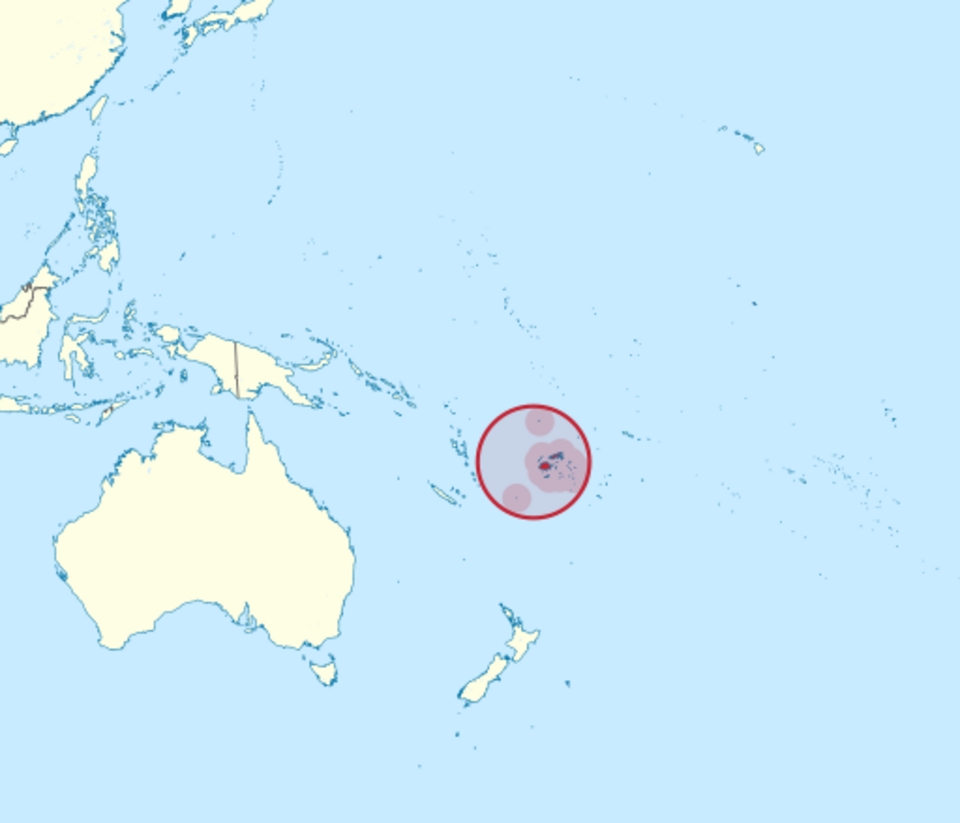
Image Courtesy TUBS, Wikimedia
Australia and Fiji signed the Vuvale Union and Ocean of Peace Alliance on 6 July 2026, including a mutual defence obligation and broader commitments across security, economic and people-to-people links.
Australia and Fiji have moved their relationship from strategic partnership into formal alliance architecture.
On 6 July 2026, Prime Minister Anthony Albanese and Fiji Prime Minister Sitiveni Rabuka signed two historic treaties in Suva - the Vuvale Union and the Ocean of Peace Alliance. The Australian Government described the agreements as one of the most significant bilateral endeavours Australia has undertaken with any country. The Ocean of Peace Alliance introduces a mutual defence commitment, while the Vuvale Union broadens cooperation across security, the economy, skills, people-to-people links and regional prosperity.
This is strategically significant for three reasons.
First, it is Fiji’s first formal defence alliance. Second, it is only Australia’s fourth formal alliance, after the United States, New Zealand and Papua New Guinea. Third, the treaty is being framed not just as a defence instrument, but as a Pacific regional resilience instrument, with an explicit link to the Blue Pacific Ocean of Peace Declaration and shared responses to transnational crime, climate change and regional security pressures.
The agreement also comes at a time when the Pacific is becoming more contested. China has expanded economic, diplomatic and security engagement across the region, while Australia has been strengthening Pacific security partnerships through agreements with Papua New Guinea, Vanuatu and now Fiji. Reuters reported that the Australia-Fiji treaty requires consultation on security threats and joint action to meet common danger if either country is attacked.
A defence treaty is only as strong as the systems that sit underneath it. That includes port access, fuel continuity, maritime surveillance, cyber coordination, medical evacuation capability, disaster-response logistics, workforce skills, communications redundancy and trusted regional governance. The Pacific faces traditional military pressure, but it also faces cyclones, infrastructure fragility, illegal fishing, transnational crime, cyber vulnerability, health-system stress and climate displacement.
The Vuvale Union is therefore important because it links security to economic integration and skills development. The opening of the Vuvale Skills Hub and the Pacific Australia Skills program should be read as more than a development initiative. In resilience terms, skills are infrastructure. A Pacific workforce capable of maintaining roads, ports, energy assets, health systems, communications and emergency services is part of the region’s strategic depth.
The Ocean of Peace Alliance also creates a precedent. Other Pacific countries may assess whether this model is a defensive shield, a diplomatic balancing mechanism or a practical continuity framework. Australia’s challenge will be to ensure the agreement is not seen as a narrow counter-China instrument, but as a Pacific-led resilience architecture that strengthens sovereignty, local capability and collective preparedness.
The real test will come over time. If the treaty produces more coordinated disaster response, stronger maritime domain awareness, improved defence interoperability, better infrastructure resilience and deeper local capability, it will be more than a political announcement. It will be a Pacific resilience platform.
What This Means
This is not just a diplomatic signing. It is a regional resilience architecture story. Australia is moving from partnership language to alliance architecture in the Pacific, with direct implications for defence planning, climate security, infrastructure investment, labour mobility, logistics, maritime surveillance and regional deterrence.
Resilience Lens
The pact should be treated as a regional continuity agreement. Its strength will depend on whether defence commitments are matched by practical capability - ports, fuel, cyber, health, logistics, disaster response, communications and sovereign Pacific workforce development.
UPCOMING EVENT:
A special in-camera event on Critical Minerals will be held in the coming months.
Sign up to be included on our events here - Sign Up
Sources:
Australian Minister for Foreign Affairs - Australia and Fiji sign historic Vuvale Union and Ocean of Peace Alliance
Reuters - Australia signs major defence alliance with Fiji, seeking to counter China
Associated Press - Australia and Fiji seal a new mutual defence pact in a push to counter China in the Pacific
ABC News - Australia strikes new defence alliance with Fiji
About C4R™ - CENTRE FOR RESILIENCE :
C4R™- CENTRE FOR RESILIENCE provides curated, source-based analysis and reporting, combining verified news with strategic insight and resilience-focused interpretation. For in depth analysisof topics like these reach out to C4R™.
C4R™ - CENTRE FOR RESILIENCE is an independent, Australian-based Think Tank initiative advancing economic, social, infrastructure and leadership resilience through research, measurement and practical programs with business, government and community partners.
Media enquiries: via the C4R Contact page.