
Telstra Outage Shows Critical Communications Are National Resilience Infrastructure
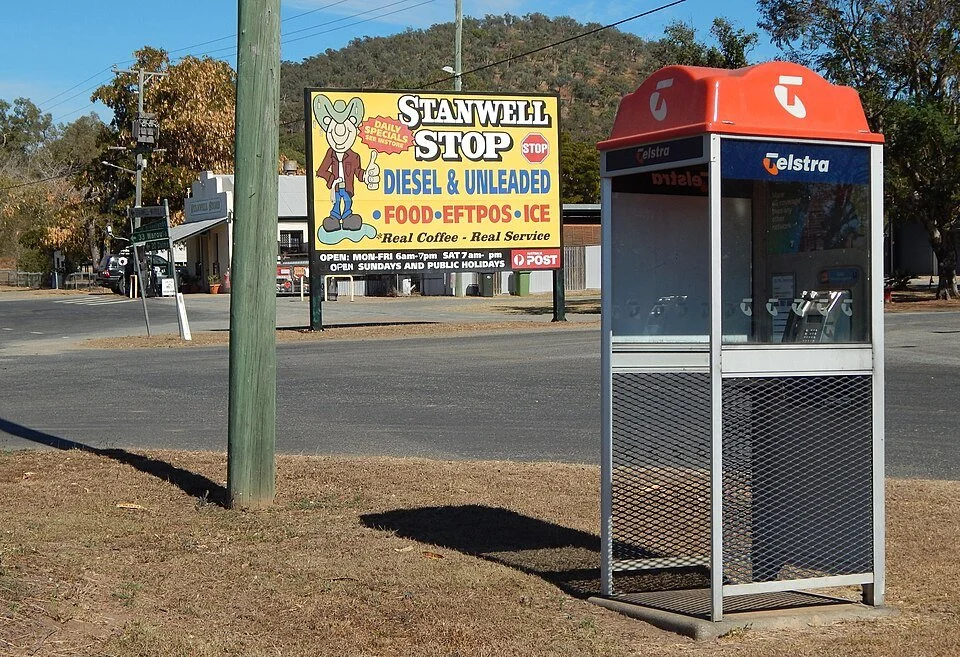
Image Courtesy Regional Queenslander, Wikimedia
Australia’s Telstra outage should not be treated as a one-day telecommunications failure. It should be treated as a national systems-continuity warning.
The outage disrupted mobile calls and data services, with flow-on impacts across emergency calling, regional rail, payment systems and business continuity. The Guardian reported continuing “secondary” issues affecting some Triple Zero calls and regional trains on 9 July, while Telstra said the issue had been substantially reduced by early morning. Reuters also reported disruption to train services and taxi payments during the outage.
Telstra’s own update stated that the problem began at about 4.30am and involved nodes that help keep time across the mobile network. ABC reported that the outage was caused by a software defect rather than a cyber incident, with the issue linked to time-synchronisation technology in Telstra’s network.
The resilience issue is not simply whether one company restored service. The deeper issue is that telecommunications now sits underneath almost every part of daily continuity. It supports emergency calls, public transport, EFTPOS, logistics, aged-care contact, household safety, government communications and business transactions.
When a mobile network fails, the disruption does not stay inside the telecommunications sector. It moves into transport, emergency management, retail trade, health access and public confidence.
Resilience Lens:
For C4R - CENTRE FOR RESILIENCE, this is a critical infrastructure lesson. Australia’s mobile networks should be treated as resilience infrastructure, with stronger redundancy obligations, clearer outage disclosure, mandatory emergency-call stress-testing, transparent post-incident reporting and clearer accountabilities when public-safety access is affected.
The practical policy question is now unavoidable: what systems are too dependent on a small number of digital networks, and what redundancy exists when those networks fail?
UPCOMING EVENTS:
_ 21𝐬𝐭 𝐉𝐔𝐋 - 𝐉𝐨𝐛𝐬, 𝐒𝐤𝐢𝐥𝐥𝐬 & 𝐌𝐢𝐠𝐫𝐚𝐭𝐢𝐨𝐧 𝐁𝐫𝐢𝐞𝐟𝐢𝐧𝐠 with Workinitiatives
_ 4𝐭𝐡 𝐀𝐔𝐆 - 𝐇𝐨𝐬𝐩𝐢𝐭𝐚𝐥𝐢𝐭𝐲 𝐔𝐧𝐝𝐞𝐫 𝐏𝐫𝐞𝐬𝐬𝐮𝐫𝐞 with Minister for Tourism, Emily Bourke
_ 8 𝐭𝐡 𝐒𝐄𝐏 𝐂𝐑𝐈𝐓𝐈𝐂𝐀𝐋 𝐌𝐈𝐍𝐄𝐑𝐀𝐋𝐒 𝐓𝐎 𝐒𝐎𝐕𝐄𝐑𝐄𝐈𝐆𝐍 𝐂𝐀𝐏𝐀𝐁𝐈𝐋𝐈𝐓𝐘 with Assistant Minister Lawrence Ben MP
_ 𝐀𝐢, 𝐂𝐲𝐛𝐞𝐫 𝐑𝐞𝐬𝐢𝐥𝐢𝐞𝐧𝐜𝐞
Sign up to be included on our events here - Sign Up
Sources:
Reuters - Telstra outage disrupts Australian train services and taxi payments.
The Guardian - Telstra outage continues with secondary impacts on Triple Zero and regional trains.
Telstra - Mobile network outage update and time-keeping node issue.
ABC News - Software defect and time-synchronisation technology behind the Telstra outage.
SBS News - Some Triple Zero calls affected and hundreds of welfare checks required.
About C4R™ - CENTRE FOR RESILIENCE :
C4R™- CENTRE FOR RESILIENCE provides curated, source-based analysis and reporting, combining verified news with strategic insight and resilience-focused interpretation. For in depth analysisof topics like these reach out to C4R™.
C4R™ - CENTRE FOR RESILIENCE is an independent, Australian-based Think Tank initiative advancing economic, social, infrastructure and leadership resilience through research, measurement and practical programs with business, government and community partners.
Media enquiries: via the C4R Contact page.