
How Australian Businesses Can Build Supply Chain Resilience and Sovereign Capability
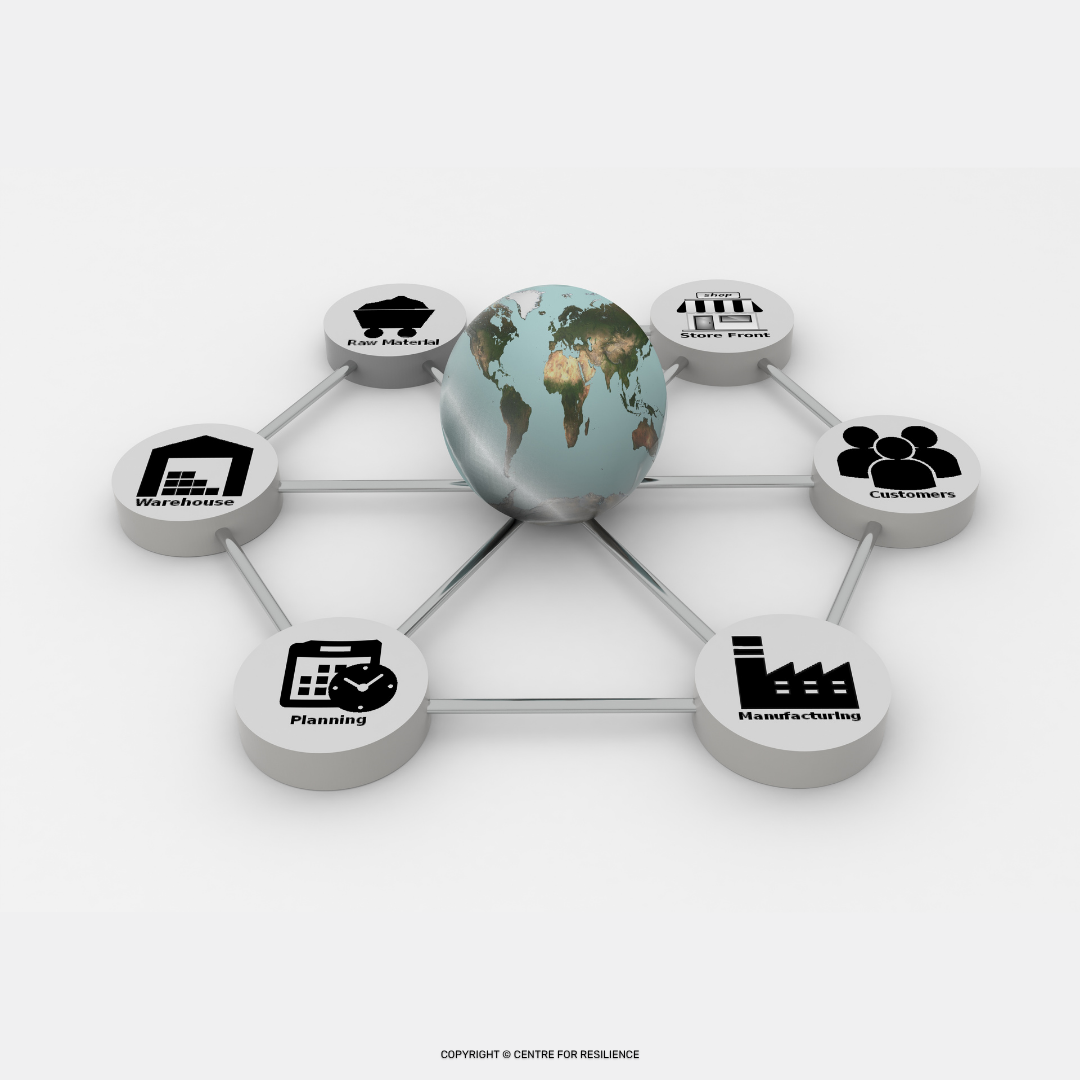
Image Courtesy: Canva
Supply chain resilience is no longer simply a procurement or logistics issue. It has become a business continuity, national security, productivity and sovereign capability issue. Australian organisations need to understand not only who supplies them, but what could stop their critical operations and what alternatives would remain available during disruption.
Australian businesses operate within increasingly complex and interconnected supply networks.
A disruption thousands of kilometres away can affect an Australian organisation through shipping delays, fuel costs, technology dependencies, shortages of components, unavailable pharmaceuticals, restricted critical minerals, cyber incidents or the failure of a supplier few people within the organisation knew was critical.
Supply chain resilience therefore requires more than maintaining additional stock or having several suppliers recorded in a procurement system.
It requires an organisation to understand its critical dependencies, vulnerabilities, alternatives and capacity to continue operating when normal supply arrangements fail.
The Australian Government's Office of Supply Chain Resilience identifies vulnerability, criticality and residual risk as central elements of assessing critical supply chains. Its work includes areas such as fuel, pharmaceuticals, renewable energy technologies, semiconductors, agricultural chemicals, water-treatment chemicals and telecommunications equipment.
For individual businesses, the same principles can be applied at organisational scale.
1. Identify What Is Actually Critical
The first step is not mapping every product purchased by the organisation.
It is identifying which products, services and capabilities are essential to maintaining critical operations.
Organisations should ask:
Which products or services must continue during disruption?
Which inputs are required to provide them?
How long could operations continue without each input?
Which customers, contracts or community services would be affected?
What would be the financial, regulatory, safety or reputational consequences?
Which dependencies have no practical substitute?
This process separates ordinary procurement issues from critical dependencies.
A low-cost item can have very high operational criticality. A specialised valve, chemical, software licence, data connection or machine component may represent only a tiny proportion of organisational expenditure but could stop an entire operation if unavailable.
Australian Government business continuity guidance similarly recommends identifying critical products, services and operational areas before disruption occurs.
2. Map Beyond the Immediate Supplier
Many organisations understand their Tier 1 suppliers reasonably well.
The vulnerabilities frequently exist further upstream.
Your Australian distributor may be reliable, but the product may ultimately depend upon:
one overseas manufacturer
a particular refinery or processing plant
a single country
one shipping route
one port
one piece of software
one telecommunications provider
one critical mineral
one specialised subcontractor.
Supply chain mapping should therefore progressively identify Tier 1, Tier 2 and, for the most critical inputs, Tier 3 dependencies.
The purpose is not to create an impossibly complicated map of the global economy.
It is to identify where concentration creates risk.
The Productivity Commission's work on vulnerable supply chains similarly distinguishes between apparent import concentration and genuine vulnerability by considering whether practical alternative sources are available globally.
3. Identify Single Points of Failure
Once critical dependencies have been mapped, organisations should identify their potential single points of failure.
These might include:
sole-source suppliers
single production facilities
concentrated geographic sourcing
critical personnel
ports and freight corridors
digital platforms
cloud infrastructure
telecommunications
fuel
electricity
water
specialist contractors
certifications or regulatory approvals.
This analysis should include both physical and digital supply chains.
The Australian Signals Directorate's current procurement and outsourcing guidance emphasises that cyber supply chain risk includes systems, applications, IT and operational technology, service providers, distribution channels, jurisdictional exposure and offshore cloud or artificial intelligence services.
Modern supply chain resilience cannot therefore be separated from cyber resilience and technology dependency.
4. Measure Time to Impact
Knowing that a dependency is important is not enough.
The organisation should understand when its loss becomes operationally unacceptable.
For example:
DependencyApproximate toleranceInternet connectionMinutes or hoursCloud platformHoursElectricityMinutes to hoursFuelHours to daysCritical pharmaceuticalDaysSpecialised industrial componentDays to weeksGeneral office consumablesWeeks
The actual tolerance will vary substantially between organisations.
This approach allows management to prioritise investment according to consequences rather than intuition.
A useful question is:
If this supply stopped today, when would the organisation become unable to deliver an acceptable level of critical service?
5. Build Genuine Alternatives
Having two suppliers does not necessarily mean having resilience.
Both suppliers might rely on the same manufacturer, country, component, port or technology platform.
Supplier diversification should therefore examine whether alternatives are genuinely independent.
Potential strategies include:
dual or multiple sourcing
different geographic regions
alternative manufacturers
substitute products or materials
alternate freight routes
local production
contingent contracts
reciprocal arrangements
strategic inventory
alternative service providers.
The appropriate response should be proportionate to the consequence of failure.
The Productivity Commission has previously identified diversification, stockpiling and contractual arrangements among the mechanisms businesses can use to manage supply chain risk.
6. Decide Where Strategic Inventory Makes Sense
Just-in-time supply can improve efficiency, but extremely lean inventory can also transfer risk from the balance sheet into operations.
Not every organisation should stockpile.
For genuinely critical inputs, however, management should understand:
How much inventory is required to provide sufficient time to activate an alternative?
This can be described as a resilience buffer.
The appropriate buffer may be measured in hours, days, weeks or months depending upon:
replacement lead time
supply volatility
product shelf life
storage cost
consequence of interruption
availability of substitutes.
The objective is not maximum inventory.
It is sufficient resilience for the identified risk.
7. Understand Supplier Resilience
Supply chain risk does not stop at product availability.
A supplier can fail because of:
financial distress
workforce shortages
cyberattack
loss of utilities
natural disaster
regulatory change
geopolitical restrictions
industrial action
loss of insurance
failure of its own suppliers.
Critical suppliers should therefore be considered as part of the organisation's continuity environment.
For strategic suppliers, organisations can ask:
Do they maintain continuity arrangements?
Where are their critical facilities?
What are their principal dependencies?
How quickly can they recover?
Do contracts specify continuity obligations?
Are there alternative suppliers already qualified?
Procurement can become a significant resilience function when supplier capability and continuity are considered alongside cost.
8. Integrate Supply Chains With Business Continuity
Supply chain resilience should not operate separately from business continuity planning.
Australian Government guidance describes business continuity as part of preparing an organisation to protect critical areas and maintain operations during emergencies.
A continuity plan should therefore identify:
critical suppliers
minimum operating requirements
substitute products
alternative logistics arrangements
escalation responsibilities
emergency procurement authority
customer communication arrangements
recovery priorities.
This allows the organisation to move from recognising a disruption to actually responding to one.
9. Test the Plan Before It Is Needed
A resilience strategy that has never been tested remains largely theoretical.
Organisations should periodically conduct scenario exercises.
Examples might include:
Scenario 1 - Critical overseas supplier unavailable for eight weeks
What inventory remains? Can another supplier be qualified? What customers are prioritised?
Scenario 2 - Major Australian port closure
What alternative freight routes are available? What additional lead times and costs arise?
Scenario 3 - Supplier cyberattack
Which systems, data or services are affected? Can operations continue independently?
Scenario 4 - Fuel disruption
Which operations depend directly or indirectly on diesel, aviation fuel or transport availability?
Scenario 5 - Geopolitical trade restriction
Which products, materials or technologies originate from the affected jurisdiction?
Testing identifies assumptions and dependencies that conventional documentation often misses.
10. Consider Sovereign Capability
Supply chain resilience and sovereign capability are related, but they are not the same thing.
Sovereign capability does not mean Australia must manufacture everything domestically.
That would be neither economically practical nor desirable.
Instead, the strategic question is:
Which capabilities must Australia be able to access, control, produce, substitute or restore because their prolonged loss would materially affect national security, economic continuity or essential services?
The Australian Government's Office of Supply Chain Resilience explicitly identifies potential responses ranging from information sharing and international collaboration through to strategic stockpiling, contingent contracting and, in selected circumstances, development of sovereign capability.
For businesses, sovereign capability may involve:
Australian manufacturing
local maintenance capability
domestic intellectual property
workforce capability
local processing
repair and sustainment
diversified allied-country supply
strategic inventory
assured access to critical inputs.
The objective is not simply to ask:
"Is this Australian made?"
The stronger question is:
"Can Australia maintain the capability when the international system is under pressure?"
11. Look at the Entire Capability Chain
A country possessing a resource does not automatically possess sovereign capability.
For example, a mineral may need to move through:
exploration → extraction → concentration → processing → refining → component manufacturing → final assembly → maintenance → recycling.
If several critical stages occur offshore, apparent domestic resource strength may still contain significant dependencies.
The same principle applies at business level.
Organisations should understand where value, capability and control actually sit throughout the chain.
12. Make Resilience Part of Investment Decisions
Supply chain resilience has a cost.
So does disruption.
Boards and executives therefore need to consider resilience as an investment decision rather than simply an operational expense.
The correct comparison is not:
"What does an alternative supplier cost?"
It is:
"What does the alternative supplier cost compared with the financial and operational consequence of losing the existing supply?"
This moves resilience from procurement administration into enterprise risk and capital allocation.
A Practical Supply Chain Resilience Checklist
Australian organisations can begin by asking ten questions:
What are our critical products and services?
Which inputs are essential to delivering them?
Where do those inputs actually originate?
Where are our single points of failure?
How long can we operate without each critical dependency?
What genuine alternatives exist?
How resilient are our critical suppliers?
What inventory or contingency arrangements are appropriate?
Have supply chain risks been integrated into business continuity?
Have we tested our assumptions through realistic disruption scenarios?
An organisation unable to answer these questions may have a supply chain strategy, but it may not yet have supply chain resilience.
From Efficiency to Resilience
For decades, supply chains were principally optimised around cost, speed, inventory efficiency and global specialisation.
Those factors remain important.
However, geopolitical competition, cyber risk, extreme weather, shipping disruption, workforce shortages, energy insecurity and technological concentration have changed the operating environment.
The objective is therefore not to abandon efficiency.
It is to ensure that efficiency does not create unrecognised fragility.
Resilient organisations understand what they depend upon, where vulnerabilities exist, what alternatives are available and what actions need to occur before disruption becomes crisis.
How C4R - CENTRE FOR RESILIENCE Can Assist
C4R - CENTRE FOR RESILIENCE works with organisations, industry and stakeholders to strengthen supply chain resilience and sovereign capability.
Our work can include:
supply chain mapping
criticality assessments
strategic procurement and sourcing
supplier and dependency analysis
risk mitigation
inventory and contract review
business continuity integration
sovereign capability assessment
resilience workshops
scenario analysis
strategic intelligence and emerging-risk analysis.
Our approach connects operational supply chains with the wider environment in which they operate - including geopolitics, critical minerals, infrastructure, workforce capability, cyber risk, energy security and national resilience.
To discuss your organisation's supply chain resilience, critical dependencies or sovereign capability requirements, contact C4R - CENTRE FOR RESILIENCE.
Sources:
Australian Government - Office of Supply Chain Resilience
Productivity Commission - Vulnerable Supply Chains study
Australian Government - Business continuity and emergency planning Develop an emergency management plan
Australian Signals Directorate - Cyber supply chain risk Guidelines for procurement and outsourcing
About C4R™ - CENTRE FOR RESILIENCE :
C4R™- CENTRE FOR RESILIENCE provides curated, source-based analysis and reporting, combining verified news with strategic insight and resilience-focused interpretation. For in depth analysisof topics like these reach out to C4R™.
C4R™ - CENTRE FOR RESILIENCE is an independent, Australian-based Think Tank initiative advancing economic, social, infrastructure and leadership resilience through research, measurement and practical programs with business, government and community partners.
Media enquiries: via the C4R Contact page.