
1350 Jobs at Port Pirie and Hobart now a Sovereign Critical Minerals Test
A $105 million federal, South Australian and Tasmanian Government support package will help keep Nyrstar’s Port Pirie and Hobart operations running through 2026 while feasibility work continues on their long-term future.

Image: The grain silos, smelter and smoke stack at Port Pirie, South Australia, Wikimedia
The future of Nyrstar’s Port Pirie and Hobart operations has moved beyond a regional industry issue. It is now a national test of whether Australia can protect existing industrial jobs while building sovereign capability in critical minerals processing.
A further $105 million support package has been announced by the Australian Government, the South Australian Government and the Tasmanian Government for Nyrstar’s operations in Port Pirie and Hobart. The package is designed to support continued operations through 2026 while Nyrstar completes pre-feasibility work, progresses further feasibility studies and participates in a joint government review to determine the long-term pathway for the two sites.
The employment number is significant. Based on current public reporting, the package supports about 1350 direct jobs across the two operations - around 800 direct jobs at Port Pirie and around 550 direct jobs at Hobart. The broader exposure is larger when contractors, suppliers and indirect employment are included.
That matters because these are not ordinary industrial sites. Port Pirie and Hobart sit inside Australia’s remaining domestic smelting and refining base. They are linked to lead, zinc, silver, sulphuric acid and emerging critical minerals production. Port Pirie is also now directly linked to antimony, a material with strategic relevance across defence, semiconductors, energy, automotive and industrial supply chains.
For Port Pirie, the issue is particularly important. Nyrstar’s Port Pirie facility has operated for more than 130 years and remains one of the Upper Spencer Gulf’s most significant industrial employers. It is not only a regional jobs story. It is a question of whether South Australia can use a legacy smelting asset as a platform for future-facing critical minerals production.
The antimony milestone is central to that opportunity. Nyrstar has already moved into pilot production of antimony metal at Port Pirie, with previous reporting indicating targets to scale production over time if commercial, technical and investment conditions are met. That gives Port Pirie a potential role in allied supply chains at a time when antimony security has become more strategically sensitive.
However, the current support package should not be treated as a completed success story. It is a bridge, not the final destination.
The package provides operating continuity through 2026 and buys time for feasibility work, investment assessment and government review. It does not, by itself, resolve long-term structural questions around commercial viability, energy costs, global market competition, capital requirements, environmental obligations, plant modernisation and the final scope of future critical minerals production.
The next stage is therefore critical.
Nyrstar must complete the current pre-feasibility work, progress the further feasibility study, define the scope of major upgrades at Port Pirie and Hobart, and work with governments through the joint review process. Governments will then need to determine whether the long-term pathway is commercially credible, strategically necessary and capable of supporting both jobs and sovereign industrial capability.
For C4R - CENTRE FOR RESILIENCE, this is a high-priority resilience case study. It brings together regional employment, industrial transition, critical minerals, defence supply chains, energy security, sovereign capability and the challenge of keeping advanced processing capacity onshore.
The central question is no longer just whether Port Pirie and Hobart can stay open in 2026.
The deeper question is whether Australia can convert short-term support for 1350 direct jobs into a durable national capability in critical minerals processing.
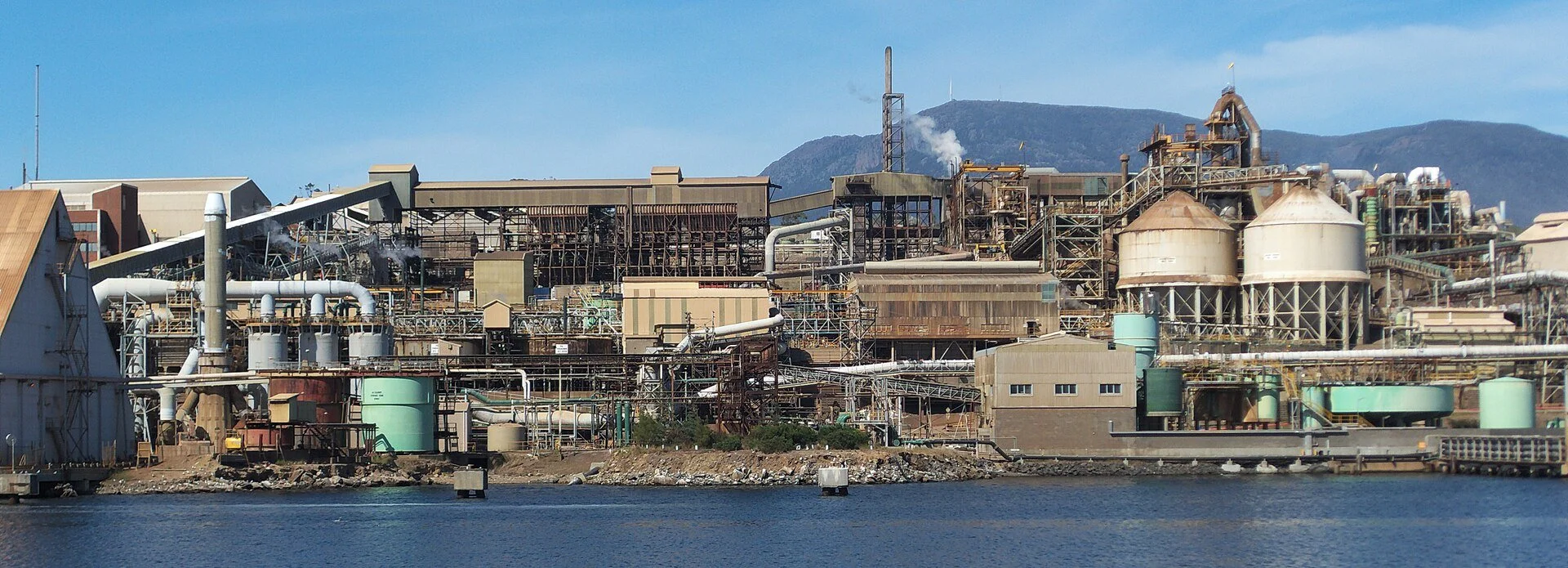
Image: Nyrstar Hobart Operations
Where This Sits in the Development Pipeline
Current stage: Operating support and feasibility phase.
What has happened:
The Australian, South Australian and Tasmanian Governments have announced a further $105 million package to support continued Nyrstar operations at Port Pirie and Hobart through 2026.
What the funding supports:
The package supports continued operations, completion of pre-feasibility work, progression of further feasibility studies, and a joint review between Nyrstar and governments.
What has already been achieved:
Port Pirie has moved into antimony pilot production, with Nyrstar having announced Australia-produced antimony metal from the site.
What happens next:
Nyrstar must finalise the scope of major upgrades, progress feasibility work, engage in the joint government review and move towards future investment decisions for both Port Pirie and Hobart.
What remains unresolved:
Long-term commercial viability, capital funding, energy cost exposure, global price competition, environmental obligations, the final production model and the scale of future critical minerals production.
Resilience Lens:
This is a high-severity jobs, supply-chain and sovereign capability story.
The immediate resilience issue is the protection of about 1350 direct jobs across Port Pirie and Hobart.
The strategic resilience issue is whether Australia can maintain and modernise domestic smelting and refining capacity while building critical minerals processing capability in materials such as antimony.
The long-term test is whether government support can move beyond temporary industrial assistance and become a credible pathway for sovereign processing, allied supply-chain depth and regional economic resilience.
Sources:
Premier of South Australia - Governments supporting critical minerals processing and securing local jobs - https://www.premier.sa.gov.au/media-releases/news-items/governments-supporting-critical-minerals-processing-and-securing-local-jobs
ABC News - Nyrstar smelters in Hobart and Port Pirie to receive $105 million in further federal-state government help - https://www.abc.net.au/news/2026-06-10/tas-sa-nyrstar-zinc-smelter-feasibility-funding/106779084
Nyrstar - Nyrstar marks Port Pirie’s first shipment of Australian-produced antimony metal - https://www.nyrstar.com/resource-center/press-releases/nyrstar-marks-port-piries-first-shipment-of-australian-produced-antimony-metal
Reuters - Trafigura’s Nyrstar casts first antimony at South Australia plant - https://www.reuters.com/world/asia-pacific/trafiguras-nyrstar-casts-first-antimony-south-australia-plant-2025-11-20/
About C4R™ - CENTRE FOR RESILIENCE :
C4R™- CENTRE FOR RESILIENCE provides curated, source-based analysis and reporting, combining verified news with strategic insight and resilience-focused interpretation. For in depth analysis of topics like these reach out to C4R™.
C4R™ - CENTRE FOR RESILIENCE is an independent, Australian-based Think Tank advancing economic, social, infrastructure and leadership resilience through research, measurement and practical programs with business, government and community partners.
Media enquiries: via the C4R Contact page.