
South Australia moves into preparedness mode as H5 bird flu reaches mainland Australia
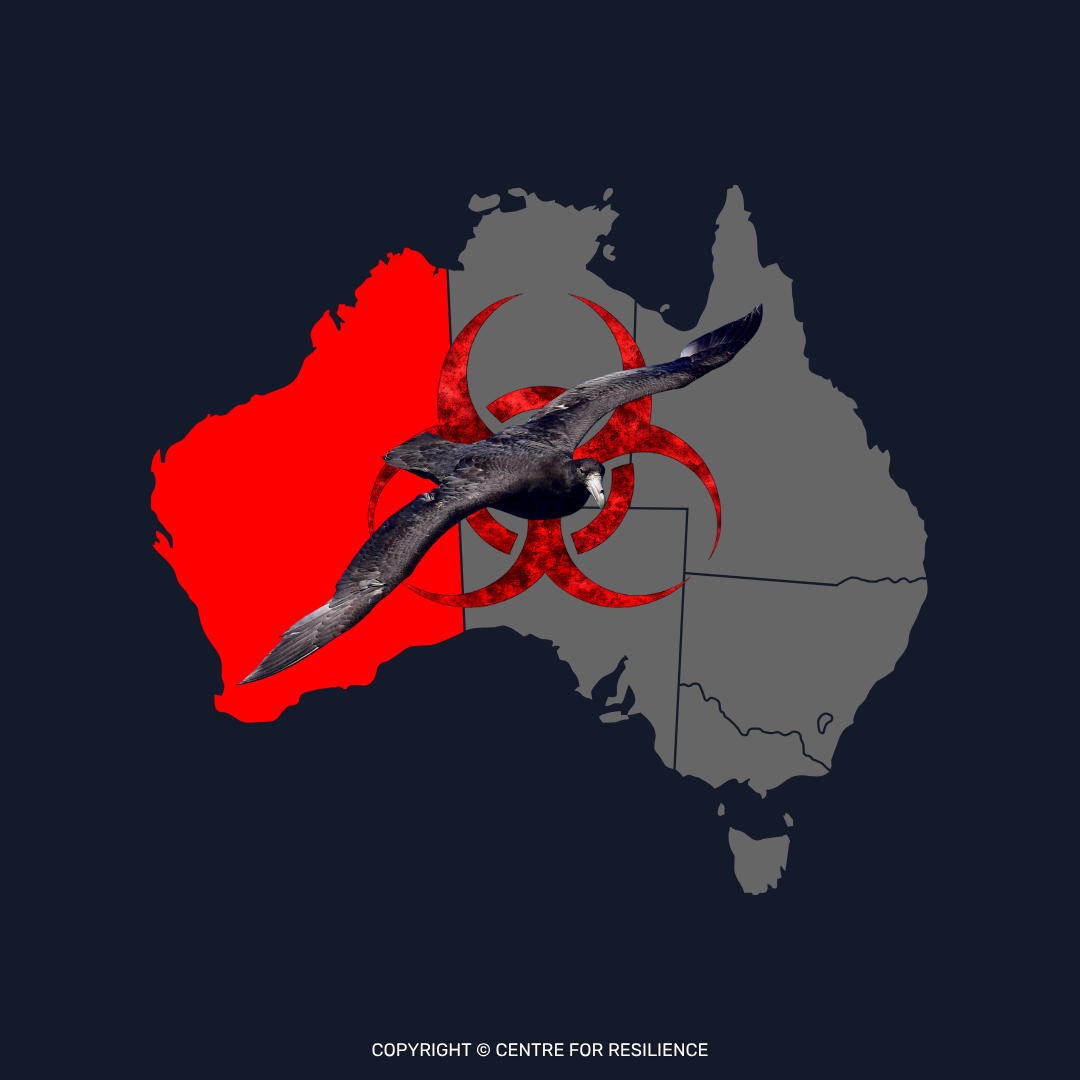
Image: Canva & Centre for Resilience
As highly pathogenic H5 avian influenza reaches mainland Australia for the first time, South Australia has begun activating its preparedness arrangements, highlighting how modern resilience depends on anticipating threats before they become local emergencies.
The confirmation of H5 avian influenza in a wild migratory bird in Western Australia has prompted governments across Australia to move from planning to operational readiness.
In South Australia, Premier Peter Malinauskas confirmed during an ABC Radio Adelaide interview on Monday morning that the State Government's Emergency Management Cabinet Committee was meeting to review the state's preparedness, response capability and next steps.
Although South Australia has no confirmed H5 cases, the meeting signals that government is treating the detection as a national biosecurity event rather than simply a Western Australian issue.
The focus has shifted from monitoring the global spread of H5 to ensuring South Australia's agriculture, wildlife, emergency management and public health systems are prepared should the virus spread east.
What This Means
This is exactly what resilience should look like. The virus has not reached South Australia, yet government is already reviewing preparedness. That distinction is important. Highly pathogenic avian influenza is capable of affecting multiple interconnected systems simultaneously, including:
commercial poultry production
wildlife conservation
migratory bird populations
food production
regional economies
tourism
veterinary services
emergency management
public confidence
Rather than waiting for a local outbreak, South Australia is demonstrating an anticipatory approach by reviewing plans while the threat remains external.
The Real Story - Preparedness, Not Panic
Australia has spent several years preparing for the eventual arrival of H5. Nationally, governments have invested more than $100 million into preparedness measures including:
enhanced wild bird surveillance
poultry biosecurity programs
national laboratory capability
emergency response planning
One Health coordination
wildlife monitoring
pandemic preparedness planning
South Australia has complemented those national measures through investment in emergency animal disease preparedness, surveillance capability, diagnostic capacity, workforce training, simulation exercises, specialist decontamination equipment and mobile diagnostic capability.
The Premier's decision to convene senior ministers and emergency agencies demonstrates that preparedness is now transitioning from planning documents into operational decision-making.
Resilience Lens
For C4R - CENTRE FOR RESILIENCE, this is a governance and resilience story. The strongest resilience systems are those that begin coordinating before the crisis arrives. South Australia's response reflects several resilience principles:
anticipatory leadership
cross-government coordination
One Health planning
evidence-based decision making
maintaining public confidence
protecting critical food systems
safeguarding biodiversity
preserving agricultural continuity
Whether H5 ultimately reaches South Australia or not, the preparedness actions taken today will determine the effectiveness of tomorrow's response.
Why This Matters
COVID-19 demonstrated that preparedness cannot begin after a threat arrives.
Similarly, the ongoing harmful algal bloom affecting South Australia's coastline has reinforced how environmental events can rapidly become multi-agency resilience challenges involving public health, primary industries, tourism, environmental management and public communications.
H5 avian influenza represents another complex systems challenge. Unlike human pandemics, wildlife diseases cannot simply be isolated through borders or quarantine. The objective therefore becomes:
detect early
coordinate rapidly
communicate clearly
minimise spread
protect critical industries
preserve public confidence
This is resilience in practice.
C4R Position
The arrival of H5 on mainland Australia should not create alarm.
It should reinforce confidence that governments are acting before the threat reaches their jurisdictions.
The meeting convened by Premier Peter Malinauskas illustrates the type of proactive governance expected within a resilient state. Preparedness is most effective when it happens before it is needed.
That is the real resilience story emerging from South Australia today.
What you can do
The community is encouraged to report any dead or sick birds or animals showing signs of bird flu.
If you see multiple sick or dead birds or other animals, do not touch them.
Avoid contact. Record what you see. Report it to the Emergency Animal Disease Hotline on 1800 675 888 from anywhere in Australia.
Sources:
ABC Radio Adelaide - Premier Peter Malinauskas confirmed the Emergency Management Cabinet Committee was meeting to review South Australia's preparedness following the mainland H5 detection.
DAFF confirms the 20 June 2026 detection in a brown skua, notes CSIRO ACDP confirmation, and states the public health and food safety risk remains low when poultry products are handled and cooked correctly - Bird flu (Avian influenza)
DAFF’s preparedness page confirms more than $100 million in H5 preparedness funding, the national HPAI Preparedness Taskforce, One Health framing, surveillance programs, poultry monitoring and Indigenous ranger involvement - What we are doing to prepare for bird flu
WA confirms enhanced surveillance, poultry-industry engagement, wildlife-carer engagement and public reporting through the Emergency Animal Disease Hotline - First case of H5 bird flu confirmed in Western Australia
About C4R™ - CENTRE FOR RESILIENCE :
C4R™- CENTRE FOR RESILIENCE provides curated, source-based analysis and reporting, combining verified news with strategic insight and resilience-focused interpretation. For in depth analysisof topics like these reach out to C4R™.
C4R™ - CENTRE FOR RESILIENCE is an independent, Australian-based Think Tank initiative advancing economic, social, infrastructure and leadership resilience through research, measurement and practical programs with business, government and community partners.
Media enquiries: via the C4R Contact page.