
C4R Weekly News Wrap Up
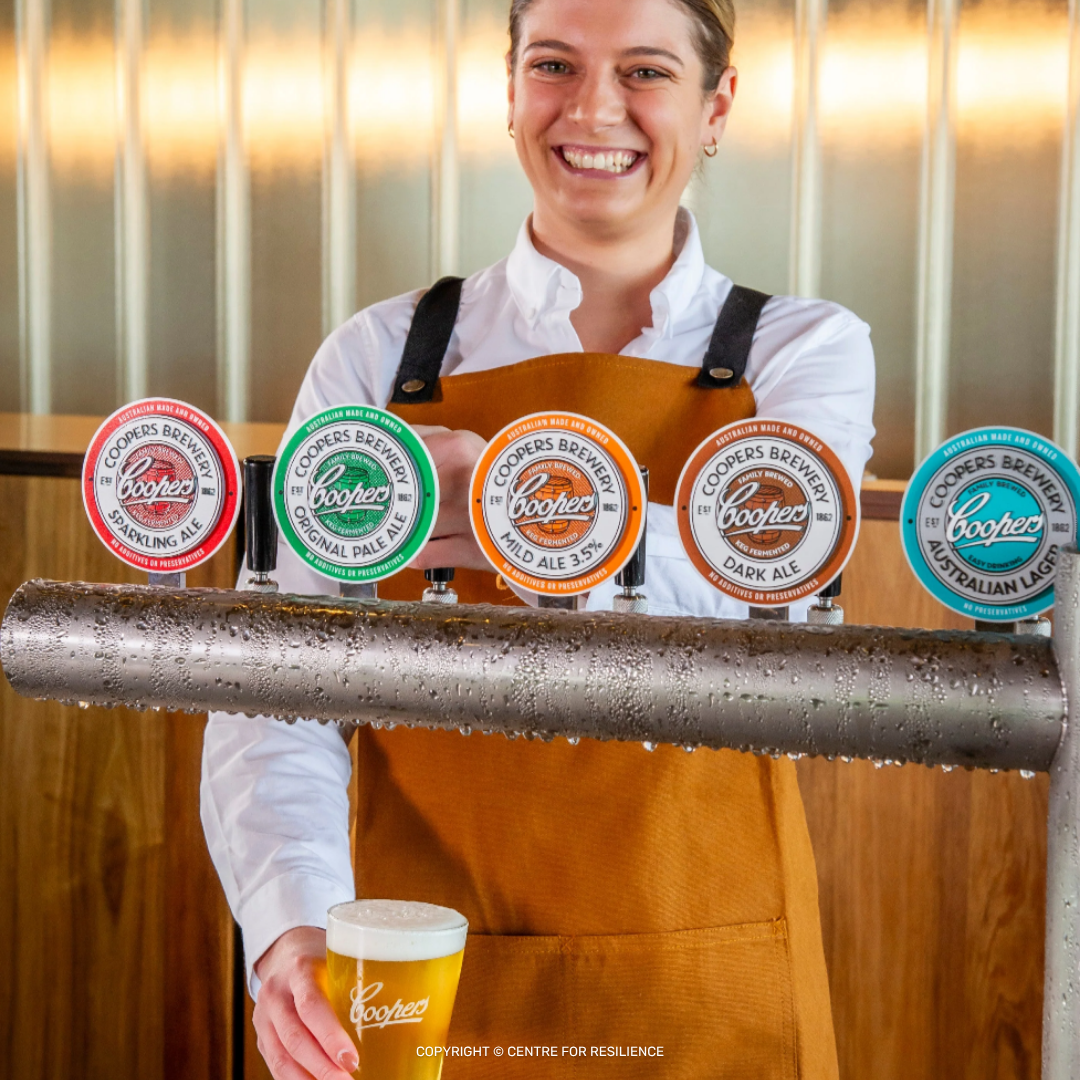
Image: Coopers
Visitor economy, aviation, culture, premium branding, hidden supply-chain exposure, governance reform, South Australian brand strength and urban resilience.
Weekly Theme
Visitor economy, aviation, culture, premium branding, hidden supply-chain exposure, governance reform, South Australian brand strength and urban resilience.
This week was dominated by major events, restored international connectivity, cultural tourism, premium food and beverage manufacturing, planning reform and supply-chain vulnerability.
South Australia’s visitor economy strengthened through Gather Round and Qatar Airways, while Tasmania’s Dark Mofo showed how a city can turn winter into a resilience advantage.
Weekly What This Means
Events, aviation, hospitality, local producers, cultural identity and city activation are now part of economic resilience.
Visitor-economy resilience is strongest when it includes sport, culture, conferences, aviation, accommodation, hospitality, retail and local product activation.
Hidden supply-chain risks, such as lubricant and base-oil shortages, show how distant shocks can affect Australian businesses and essential fleets.
Governance and planning reform remain material because housing, infrastructure and investment delivery depend on effective local and state coordination.
Weekly Resilience Lens
A resilient place is not built by one sector. It is created through connected systems of events, aviation, hospitality, manufacturing, logistics, governance and community participation.
South Australia’s resilience opportunity is to turn events, brands, aviation and infrastructure into repeatable economic demand.
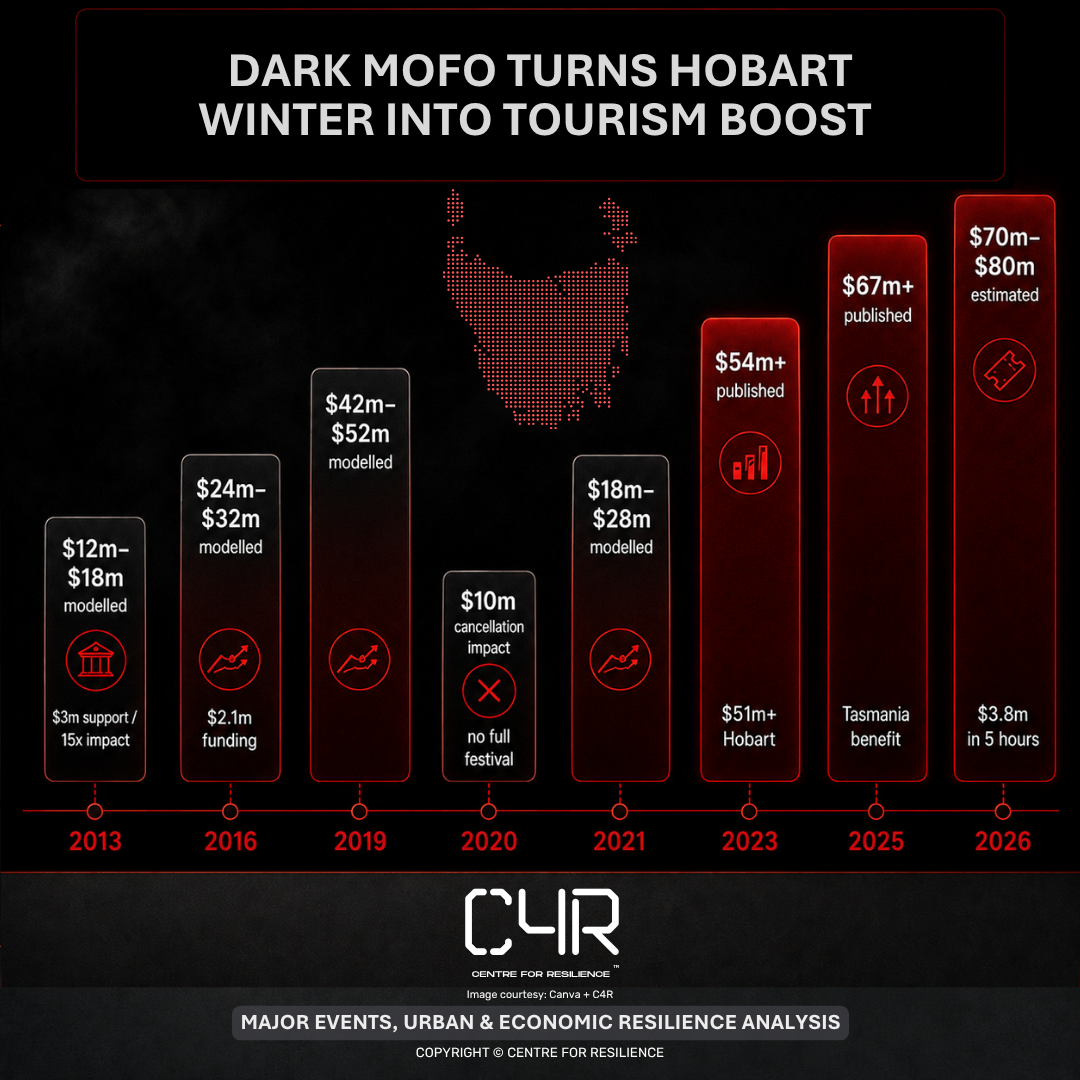
Hobart’s Dark Mofo model shows that winter activation and whole-of-city participation can create economic resilience, not only cultural impact.
Hidden inputs such as lubricants, base oils and maintenance products need to be monitored as part of supply-chain resilience.
Key Story Signals
Gather Round secured in South Australia to 2029 - major events were assessed as recurring economic infrastructure.
Gather Round hotel demand - accommodation demand was assessed as a visitor-economy resilience signal.
Gather Round hospitality uplift - hospitality and precinct activation were assessed as business-continuity benefits.
Gather Round aviation and interstate visitation - event-driven travel was assessed as a connectivity and tourism signal.
Gather Round regional promotion - South Australia’s broader visitor economy was assessed through destination exposure.
Qatar Adelaide - Doha flights restored from 16 June - restored aviation connectivity strengthened tourism, freight, education and trade.
Qatar freight capacity - international air freight was assessed as an export and supply-chain resilience asset.
Qatar student and business travel links - international education and business mobility were assessed as economic-connectivity signals.
Qatar tourism pathway - direct access to Doha was assessed as global market reach for South Australia.
State Government signals harder line on Adelaide's Councils - planning and council performance were assessed as urban resilience issues.
Council planning approvals - housing and development timing were treated as resilience constraints.
Local government delivery capacity - governance performance was assessed as infrastructure and housing risk.
Adelaide housing supply pressure - planning and delivery systems were assessed as capacity risks.
Dark Mofo delivers winter tourism boost as Hobart strengthens year-round visitor economy - cultural tourism was assessed as winter economic infrastructure.
Dark Mofo whole-of-city activation - retail, hospitality, public spaces and local producers were assessed as ecosystem participation.
Dark Mofo as a model for Adelaide - civic participation and precinct-wide activation were assessed as transferable lessons.
Coopers targets Queensland as sales surge in declining beer market - Coopers was assessed as brand resilience in a declining category.
Coopers interstate expansion - South Australian manufacturing reach was assessed as a market resilience signal.
Coopers independent brand identity - brand trust and local identity were assessed as commercial resilience.
Middle East energy shock creates Australian lubricant shortages - lubricants were assessed as hidden critical inputs.
Lubricant shortage and transport fleets - fleet maintenance was assessed as a supply-chain continuity risk.
Lubricant shortage and agriculture - farm machinery uptime was assessed as food-system resilience exposure.
Lubricant shortage and mining - industrial operations were assessed as exposed to maintenance inputs.
Lubricant shortage and construction - machinery and project continuity were assessed as operating risks.
Dark Lark 2026 release demonstrates the power of premium branding - premium products were assessed as visitor-economy extensions.
Dark Lark and Dark Mofo collaboration - cultural events and local manufacturing were assessed as linked economic assets.
US weapons stockpile planning in Australia - allied logistics and defence sustainment were assessed as strategic capability issues.
Whyalla remains a sovereign steel test - steel was assessed as industrial, construction, defence and regional resilience.
South Australian proton therapy cancer unit - advanced medical infrastructure was assessed as sovereign health capability.
Australia data centre plan - data infrastructure was assessed as energy, water and planning resilience.
RBA and economic pressure - interest-rate settings were assessed as household and business resilience indicators.
Migration and housing pressure - population growth was assessed against housing and infrastructure capacity.
Critical minerals and Port Pirie - processing capability remained a sovereign resilience signal.
Adelaide business events pipeline - business events were assessed as high-value tourism and professional-services infrastructure.
About C4R™ - CENTRE FOR RESILIENCE :
C4R™- CENTRE FOR RESILIENCE provides curated, source-based analysis and reporting, combining verified news with strategic insight and resilience-focused interpretation. For in depth analysisof topics like these reach out to C4R™.
C4R™ - CENTRE FOR RESILIENCE is an independent, Australian-based Think Tank initiative advancing economic, social, infrastructure and leadership resilience through research, measurement and practical programs with business, government and community partners.
Media enquiries: via the C4R Contact page.