
Osborne declared South Australia’s first Economic Zone for AUKUS submarines
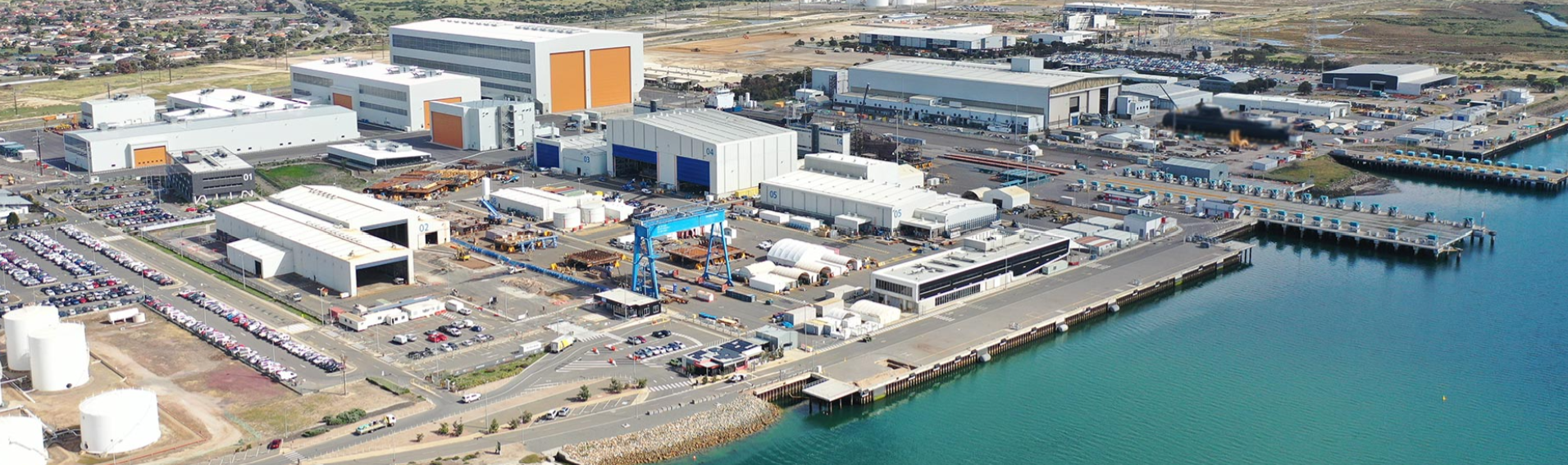
Image: DefenceSA
South Australia’s declaration of Osborne as its first State Development Area moves AUKUS from national defence policy into a practical delivery challenge across planning, infrastructure, skills, housing and supply chains.
South Australia’s declaration of Osborne as the state’s first economic “go-zone” for AUKUS submarine development is a major strategic resilience signal.
The move designates Osborne as a State Development Area, intended to fast-track planning, zoning and infrastructure approvals around the nuclear-powered submarine precinct. Reporting indicates the precinct will support a $30 billion submarine shipyard, thousands of construction and operational jobs and the wider industrial ecosystem required to deliver Australia’s future SSN-AUKUS capability.
This matters because AUKUS is now entering the most difficult phase: delivery.
The public conversation has often focused on the submarines themselves. The resilience question is broader. Can South Australia build the industrial, human, logistics and civic systems needed to support a multi-decade sovereign defence programme?
Osborne already sits at the centre of Australia’s naval shipbuilding sector. Defence reporting confirms that Australia will build conventionally armed, nuclear-powered SSN-AUKUS submarines at Osborne, with the Submarine Construction Yard expected to be nearly three times larger than the earlier Attack-class programme yard. Defence has also stated that up to 4,000 workers will be employed at peak to design and build the infrastructure for the submarine construction yard.
For C4R - CENTRE FOR RESILIENCE, the State Development Area designation is important because it links defence capability to the physical and civic systems that make delivery possible.
Those systems include transport access, port and shipyard infrastructure, energy supply, workforce pipelines, housing, training, cyber security, supply-chain assurance, local manufacturing, regulatory coordination and community trust.
AUKUS cannot be delivered by Defence alone. It will require coordination across state planning agencies, local government, education providers, unions, industry, housing providers, transport planners, energy networks and local suppliers.
Resilience Lens
The risk is that the submarine precinct becomes a high-pressure industrial project without enough supporting infrastructure around it. The opportunity is that Osborne becomes a model of sovereign capability precinct planning - where defence, industry, training, housing, infrastructure and community benefit are planned as one system.
The declaration of Osborne as a go-zone should therefore be seen as a resilience test. Fast-tracked approvals may be necessary, but speed must be matched with governance, transparency and sequencing discipline.
If South Australia gets Osborne right, the state can strengthen its role as Australia’s most important naval shipbuilding jurisdiction. If the enabling systems lag, the programme could face avoidable bottlenecks in workforce, housing, transport, local supply and public confidence.
The strongest position for South Australia is clear: AUKUS is not only a defence project. It is a sovereign capability ecosystem.
Sources:
Government of South Australia - News | Premier of South Australia
AdelaideNow - Osborne declared South Australia’s first economic go-zone for AUKUS submarine development.
Australian Government Defence Ministers - South Australia to deliver nuclear-powered submarine build.
Infrastructure Pipeline - Osborne Submarine Construction Yard project summary.
About C4R™ - CENTRE FOR RESILIENCE :
C4R™- CENTRE FOR RESILIENCE provides curated, source-based analysis and reporting, combining verified news with strategic insight and resilience-focused interpretation. For in depth analysisof topics like these reach out to C4R™.
C4R™ - CENTRE FOR RESILIENCE is an independent, Australian-based Think Tank initiative advancing economic, social, infrastructure and leadership resilience through research, measurement and practical programs with business, government and community partners.
Media enquiries: via the C4R Contact page.