
C4R Weekly News Wrap Up
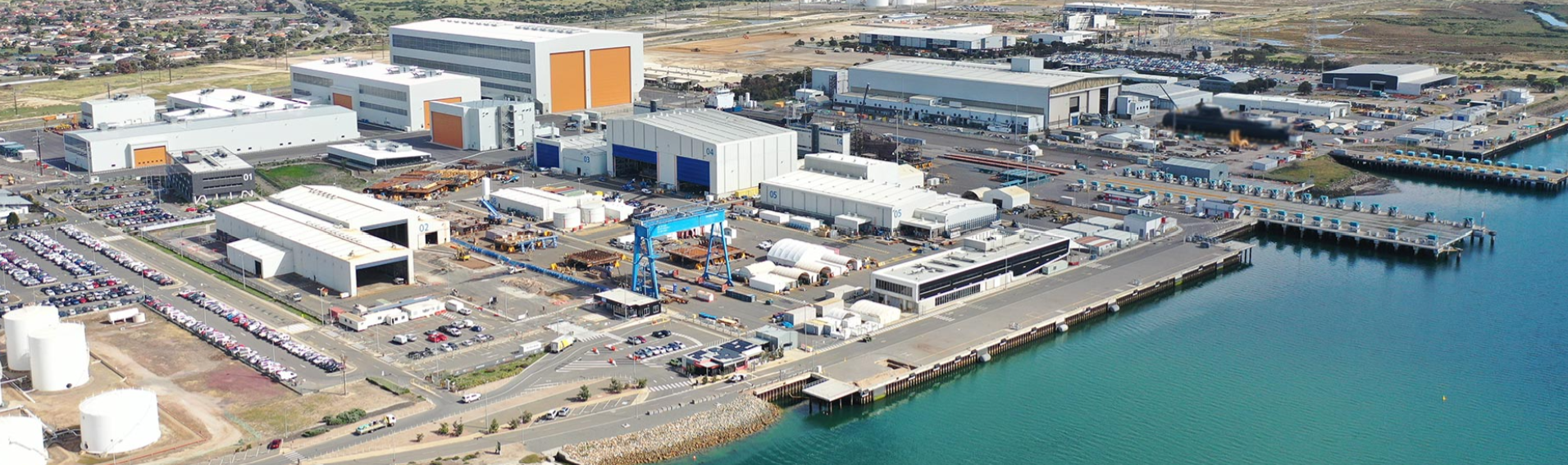
Image: DefenceSA
Australia’s resilience agenda is now multi-system.
Weekly Theme
Biosecurity, H5 avian influenza, poultry exposure, data centres, fuel security, critical minerals, sovereign capability, cyber risk, climate stress, public health and global disruption.
This was the strongest strategic resilience week of the 21-day period.
Multiple systems converged at once, including food security, energy security, digital infrastructure, critical minerals, health security, defence posture, climate adaptation and cyber resilience.
Weekly What This Means
Australia’s resilience agenda is now multi-system. Biosecurity cannot be separated from food supply. Data centres cannot be separated from energy and water. Fuel relief cannot be separated from global chokepoints. Critical minerals cannot be separated from sovereign industrial capability.
H5 avian influenza showed how quickly a biosecurity issue can become an agriculture, food, wildlife, emergency management and public communication issue.
The data centre boom showed that digital sovereignty depends on physical infrastructure such as power, water, land, fibre, cooling and emergency continuity.
Global events in Hormuz, Ukraine, Taiwan, Europe, the DRC and the UK showed that international disruption can translate into Australian preparedness challenges.
Weekly Resilience Lens
This was a convergence week.
The strongest resilience systems monitor early, connect weak signals and act before pressure becomes crisis.
These stories are linked indicators rather than isolated headlines.
The priority domains are Biosecurity and Preparedness RQ, Supply Chain RQ, Energy Security RQ, Digital and Cyber RQ, Sovereign Capability RQ, Community Health RQ, Visitor Economy RQ, Emergency Response RQ and Climate Adaptation RQ.
Key Story Signals
Dark Mofo turns Hobart Winter into tourism boost - Hobart’s winter visitor economy was assessed as a resilience model.
Stone Guardian a Mountain Culture Beer Co x Dark Lark Collab - cross-sector collaboration was assessed as visitor-economy and premium manufacturing resilience.
Stone Guardian and event-linked product innovation - limited-edition products were assessed as commercial extensions of major cultural events.
Dark Mofo whole-of-city activation - cultural programming, hospitality, retail and local products were assessed as connected tourism infrastructure.
C4R newsroom master register - the master register was assessed as the central system for tracking stories, sources, SIRE coding and publishing status.
SIRE coding and story classification - daily stories were assessed across resilience domains for future dashboard and reporting use.
Global heatmap methodology review - instability, strategic exposure, news concentration and systemic impact were separated as different map types.
Small modular reactors and Australia’s energy resilience debate - SMRs were assessed through energy security, deployable generation and sovereign capability.
Energy security as economic continuity - electricity reliability was assessed as essential for hospitals, aged care, data centres, logistics, water and food systems.
National Business and Resilience Networking Directory - network intelligence was assessed as a membership and organisational resilience tool.
SA private hospital bed utilisation questions - real capacity, not nominal bed counts, was assessed as the key health resilience issue.
South Australia moves into preparedness mode as H5 bird flu reaches mainland Australia - H5 detection was assessed as a major national biosecurity watchpoint.
H5 wild bird detection - wildlife and poultry exposure were assessed as linked biosecurity risks.
South Australian H5 preparedness - state readiness was assessed across agriculture, environment, health, industry and emergency management.
H5 Resilience Watch dashboard - daily monitoring was proposed for detections, response actions, industry impacts and SIRE indicators.
Ingham Chicken lockdown - poultry production was assessed as critical food infrastructure.
Poultry-sector workforce continuity - labour, testing, quarantine and logistics were assessed as operational risks.
Food supply and egg/chicken pricing exposure - H5 was assessed as a potential consumer-price and supply-chain issue.
South Australia’s copper exports hit record $5.2 billion - copper was assessed as a critical minerals and sovereign capability signal.
Copper and electrification - copper was assessed as an input for transmission, renewables, data centres, housing and defence.
Australia’s $155 billion data centre boom - data centres were assessed as digital infrastructure, energy demand and planning risks.
Data centre water demand - cooling and water use were assessed as material resilience constraints.
Data centre energy demand - grid capacity and reliable electricity were assessed as critical dependencies.
Data centre cyber and sovereignty risk - data security was assessed as dependent on physical and cyber resilience.
Fuel excise relief and Hormuz disruption - fuel affordability and availability were assessed as economic-continuity risks.
Strait of Hormuz chokepoint exposure - maritime chokepoints were assessed as standing national resilience indicators.
Middle East shipping and lubricant risk - hidden inputs such as base oils and lubricants were assessed as supply-chain indicators.
RBA holds cash rate at 4.35 per cent - monetary settings were assessed as household and business resilience pressures.
Household cost pressure - interest rates, fuel, food and energy were assessed as household resilience indicators.
Developer and construction feasibility - financing costs were assessed as built-environment resilience risks.
Adelaide business events generate record $314 million impact - business events were assessed as high-value visitor economy infrastructure.
Adelaide conference economy - hotels, venues, aviation and professional services were assessed as connected resilience assets.
Ukraine drone strikes on Russian oil infrastructure - energy infrastructure was assessed as a target in modern conflict.
Russia oil infrastructure disruption - oil volatility was assessed as a global energy-market risk.
Taiwan combat readiness drills - Taiwan was assessed as an Indo-Pacific defence, trade, semiconductor and shipping risk.
Chinese military pressure around Taiwan - escalation risk was assessed as a critical supply-chain exposure.
European heatwave - heat was assessed as a transport, health, wildfire, workforce and energy resilience stressor.
Heat-health warnings - aged care, hospitals and vulnerable populations were assessed as climate adaptation priorities.
Wildfire preparedness in Europe - heat and fire risk were assessed as emergency response indicators.
DRC Ebola outbreak escalation - Ebola was assessed as a global health security and regional preparedness signal.
Ebola across camps and health zones - displacement and weak health systems were assessed as outbreak accelerants.
UK critical infrastructure cyber incidents - hostile-state cyber risk was assessed as a national infrastructure concern.
Cyber resilience for utilities and hospitals - essential services were assessed as priority cyber-protection targets.
US weapons stockpile in Victoria - allied logistics, deterrence and sustainment were assessed as defence resilience issues.
Whyalla sovereign steel - steel was assessed as essential for construction, defence, energy, rail and infrastructure.
Snow 2.0 audit - cost control and governance were assessed as energy transition delivery risks.
Migration and population pressure - housing, infrastructure, hospitals, schools and transport were assessed as capacity risks.
Qantas Project Sunrise - long-haul aviation connectivity was assessed as tourism, business and strategic access infrastructure.
Australian wheat outlook weakens - fuel, fertiliser, freight and climate pressures were assessed as food and export resilience risks.
SA Budget R&D Productivity Fund - productivity and innovation were assessed as long-term economic resilience tools.
Visitor economy resilience through Qatar, Gather Round and Dark Mofo - aviation, sport and culture were assessed as linked demand drivers.
About C4R™ - CENTRE FOR RESILIENCE :
C4R™- CENTRE FOR RESILIENCE provides curated, source-based analysis and reporting, combining verified news with strategic insight and resilience-focused interpretation. For in depth analysisof topics like these reach out to C4R™.
C4R™ - CENTRE FOR RESILIENCE is an independent, Australian-based Think Tank initiative advancing economic, social, infrastructure and leadership resilience through research, measurement and practical programs with business, government and community partners.
Media enquiries: via the C4R Contact page.